
Essential Dental Health Tips for Maintaining Clean Teeth in Dogs and Cats
I used to think brushing my pet’s teeth was optional, until I noticed bad breath that would not go away. Dental health is not just about clean teeth, it affects your pet’s comfort, eating habits, and overall health more than most people realize.
Common Signs of Dental Problems in Pets
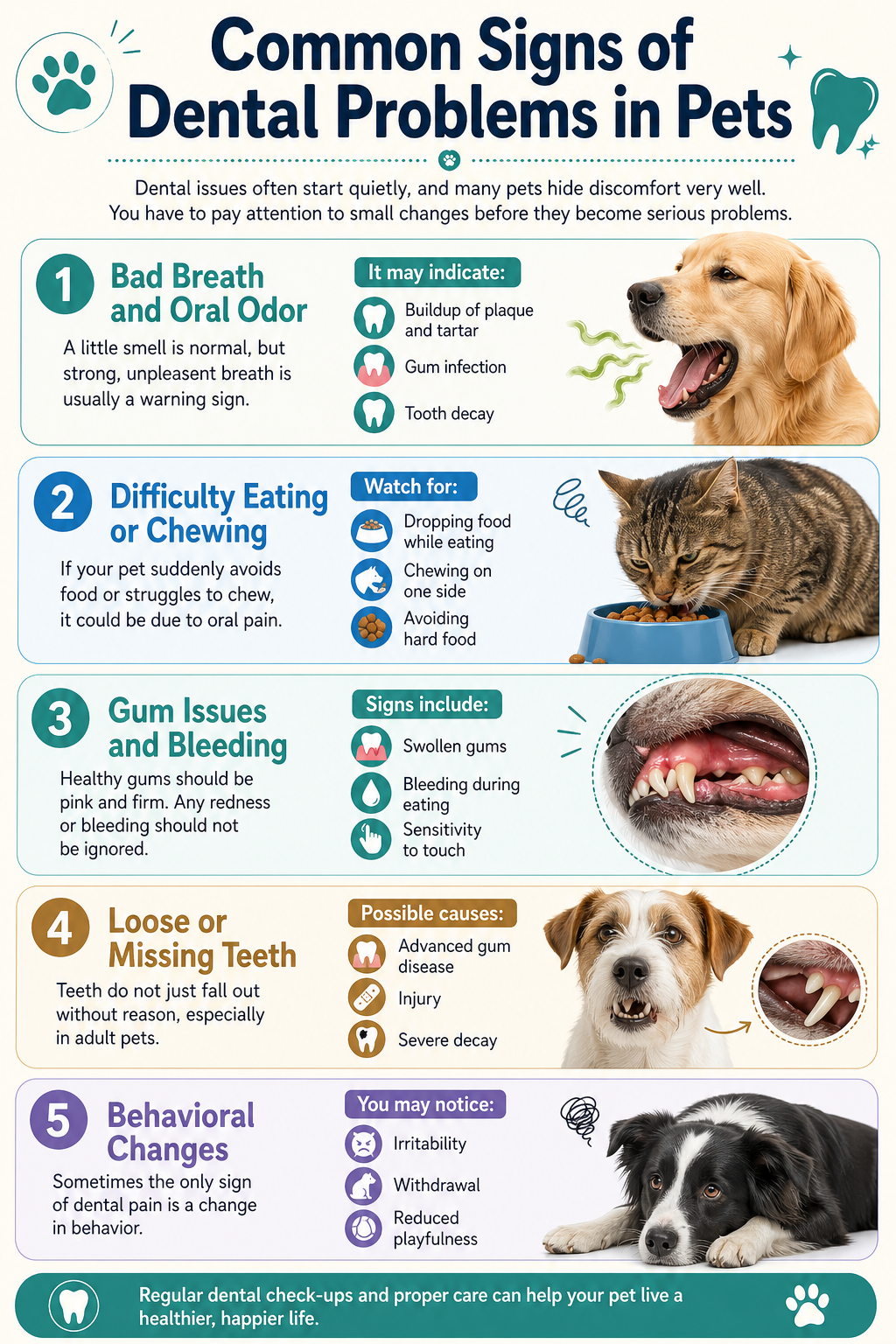
Dental issues often start quietly, and many pets hide discomfort very well. You have to pay attention to small changes before they become serious problems.
Bad Breath and Oral Odor
A little smell is normal, but strong, unpleasant breath is usually a warning sign.
It may indicate:
- Buildup of plaque and tartar
- Gum infection
- Tooth decay
Difficulty Eating or Chewing
If your pet suddenly avoids food or struggles to chew, it could be due to oral pain.
Watch for:
- Dropping food while eating
- Chewing on one side
- Avoiding hard food
Gum Issues and Bleeding
Healthy gums should be pink and firm. Any redness or bleeding should not be ignored.
Signs include:
- Swollen gums
- Bleeding during eating
- Sensitivity to touch
Loose or Missing Teeth
Teeth do not just fall out without reason, especially in adult pets.
Possible causes:
- Advanced gum disease
- Injury
- Severe decay
Behavioral Changes
Sometimes the only sign of dental pain is a change in behavior.
You may notice:
- Irritability
- Withdrawal
- Reduced playfulness
The Dangers of Poor Dental Hygiene in Pets
Ignoring dental care can lead to more than just bad breath. It can affect your pet’s entire body over time.
Gum Disease and Infection
Gum disease is one of the most common issues in pets, and it can worsen quickly if untreated.
It can lead to:
- Painful inflammation
- Infection spreading in the mouth
- Tooth loss
Tooth Decay and Loss
When plaque hardens into tartar, it damages teeth and weakens their structure.
Common outcomes include:
- Cavities
- Broken teeth
- Permanent tooth loss
Impact on Vital Organs
This surprised me the most when I learned it. Bacteria from the mouth can travel through the bloodstream.
It may affect:
- Heart
- Liver
- Kidneys
Reduced Quality of Life
Chronic dental pain can make everyday activities uncomfortable for your pet.
You may see:
- Loss of appetite
- Low energy
- Reduced interaction
How Often Should You Clean Your Pet’s Teeth?
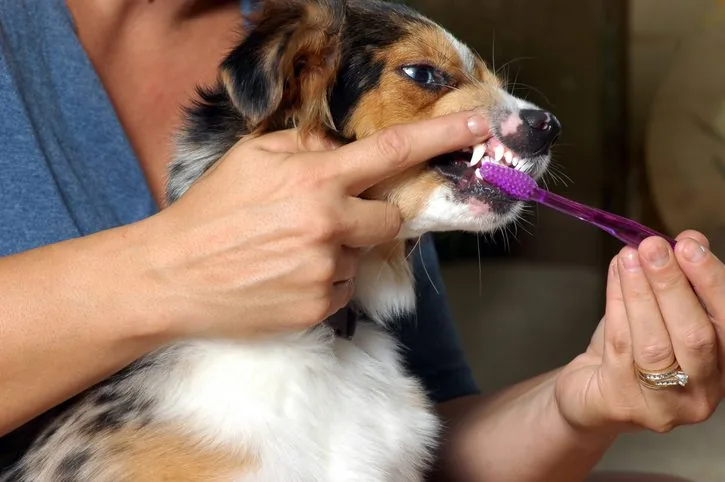
Consistency matters more than anything when it comes to dental care. It is not about doing it once in a while, it is about building a habit.
Recommended Frequency
Ideally, brushing should be done regularly to prevent buildup.
Best practice includes:
- Daily brushing for best results
- At least 3 to 4 times per week
- Regular inspection of the mouth
Age-Specific Needs
Different life stages require different approaches.
For younger pets:
- Start early to build tolerance
- Keep sessions short and positive
For older pets:
- Be gentle and patient
- Adjust based on sensitivity
Building a Routine
Pets respond well to consistency, so creating a routine helps a lot.
Helpful tips:
- Brush at the same time daily
- Pair it with rewards
- Keep sessions calm and short
Step-by-Step Guide to Brushing Your Pet’s Teeth
Brushing might feel awkward at first, but it becomes easier with practice. I remember struggling at the beginning, but patience made a big difference.
Choose the Right Tools
Using the right products makes the process smoother and safer.
You will need:
- Pet-safe toothpaste
- Soft toothbrush or finger brush
- Treats for reward
Introduce Brushing Gradually
Do not rush into brushing right away. Let your pet get used to the idea.
Start by:
- Letting them taste the toothpaste
- Touching their mouth gently
- Practicing short sessions
Proper Brushing Technique
Once your pet is comfortable, you can begin brushing properly.
Focus on:
- Gentle circular motions
- Outer surfaces of teeth
- Short sessions, about 1 to 2 minutes
Make It a Positive Experience
Your pet’s attitude depends on how you approach the process.
Encourage by:
- Offering treats afterward
- Using a calm tone
- Keeping things relaxed
Best Dental Products for Dogs and Cats
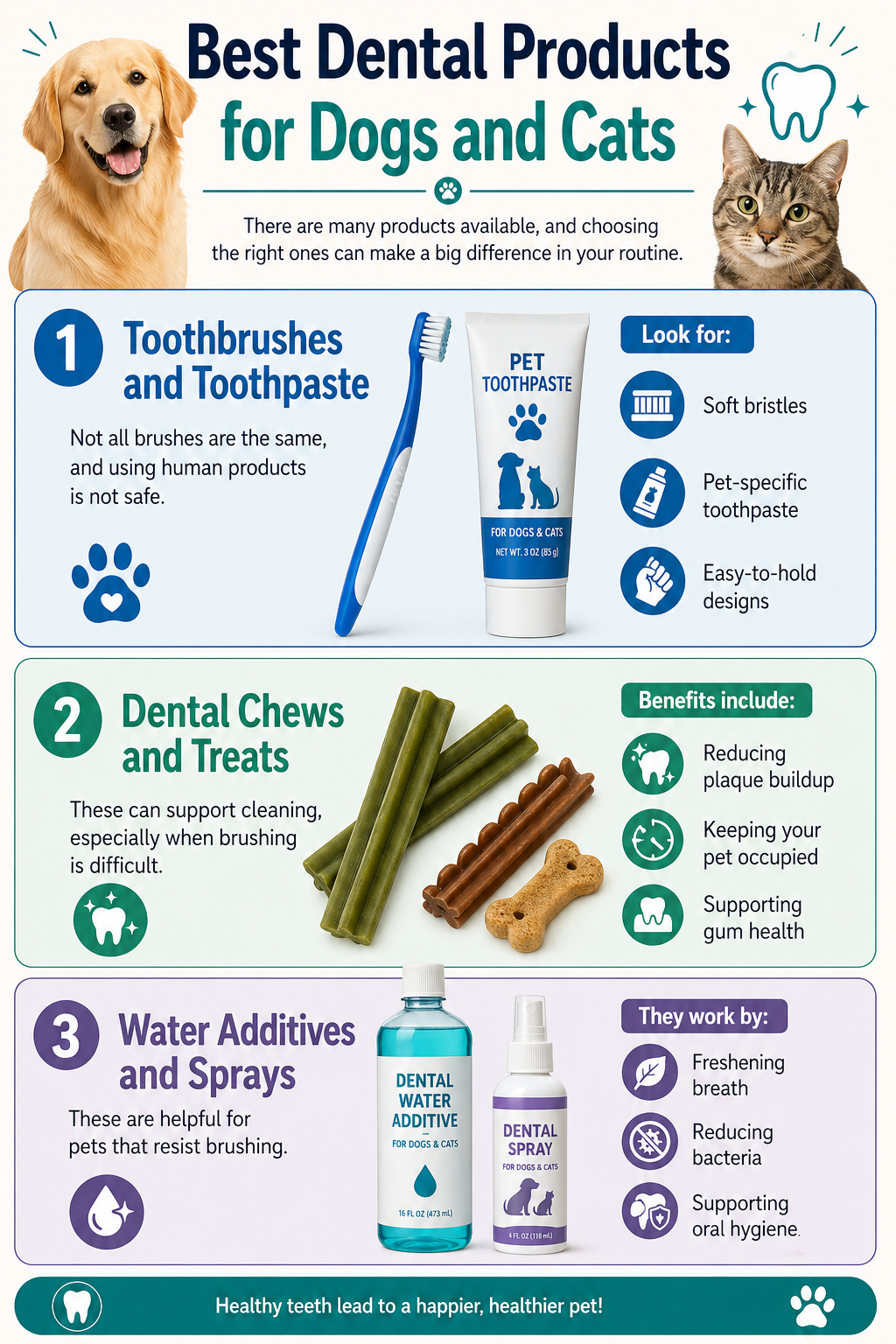
There are many products available, and choosing the right ones can make a big difference in your routine.
Toothbrushes and Toothpaste
Not all brushes are the same, and using human products is not safe.
Look for:
- Soft bristles
- Pet-specific toothpaste
- Easy-to-hold designs
Dental Chews and Treats
These can support cleaning, especially when brushing is difficult.
Benefits include:
- Reducing plaque buildup
- Keeping your pet occupied
- Supporting gum health
Water Additives and Sprays
These are helpful for pets that resist brushing.
They work by:
- Freshening breath
- Reducing bacteria
- Supporting oral hygiene
Natural Ways to Support Pet Dental Health
Some natural options can support your pet’s dental routine, but they should not fully replace brushing.
Diet and Nutrition
What your pet eats affects their dental health more than you might think.
Helpful choices:
- High-quality dry food
- Balanced nutrition
- Limited sugary treats
Safe Chewing Options
Chewing helps reduce plaque naturally, but safety is important.
Good options include:
- Vet-approved chew toys
- Dental sticks
- Durable rubber toys
Homemade Care Tips
Simple habits at home can support dental health.
Try:
- Regular mouth checks
- Gentle wiping of teeth
- Monitoring for changes
Professional Dental Care for Pets

Even with good home care, professional cleaning is still important. It helps catch issues early and keeps your pet’s mouth in good condition.
Importance of Checkups
Regular visits help identify problems before they become serious.
Benefits include:
- Early detection
- Professional advice
- Better long-term health
What to Expect During Cleaning
Professional cleanings go deeper than brushing at home.
They may involve:
- Scaling and polishing
- Examination under the gums
- Removal of damaged teeth if needed
Frequency of Visits
How often you go depends on your pet’s condition.
General guideline:
- Once a year for most pets
- More often for high-risk cases
- As recommended by your vet
Preventing Dental Disease in Dogs and Cats
Prevention is always easier than treatment. Small daily habits can save you from bigger problems later.
Start Early
The earlier you begin, the easier it becomes for both you and your pet.
Early care helps:
- Build tolerance
- Prevent plaque buildup
- Reduce fear of brushing
Regular Home Checks
Checking your pet’s mouth takes only a few seconds but can reveal a lot.
Look for:
- Redness
- Swelling
- Unusual smells
Maintain Consistency
Consistency is what makes the biggest difference over time.
Stay consistent with:
- Brushing
- Feeding habits
- Routine care
Special Dental Care Tips for Senior Pets
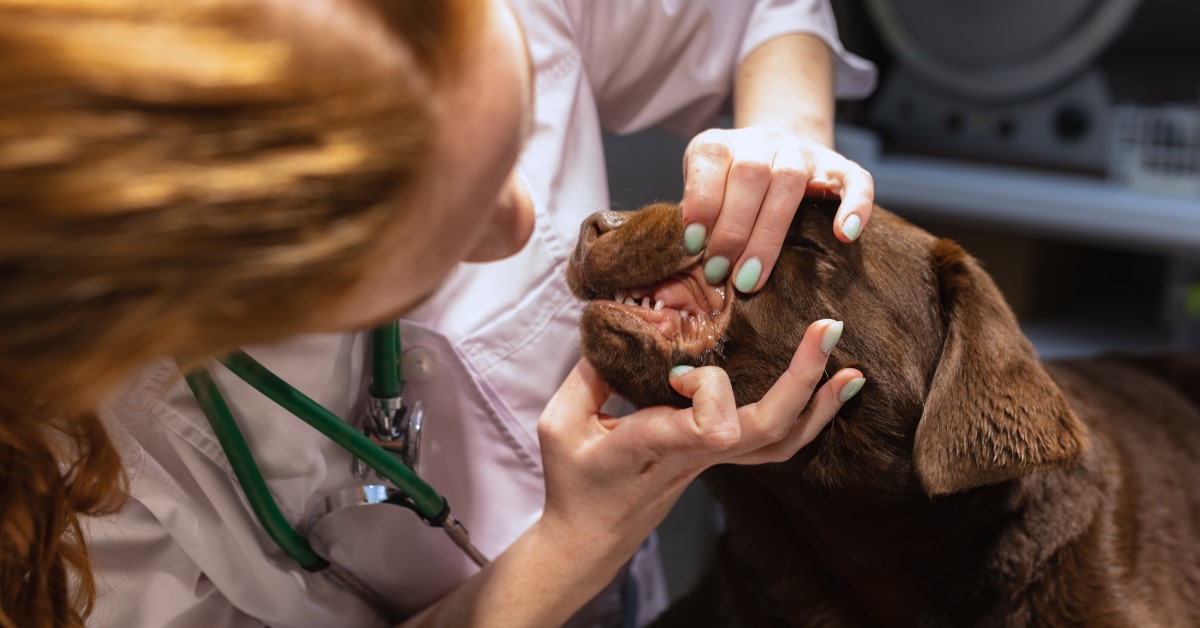
Older pets often need extra attention when it comes to dental care. Their teeth and gums may be more sensitive, so a gentle approach is key.
Age-Related Challenges
As pets age, dental problems become more common.
These may include:
- Weaker teeth
- Gum recession
- Increased plaque buildup
Adjusting the Routine
You may need to change how you care for your pet’s teeth.
Helpful adjustments:
- Softer brushes
- Shorter sessions
- More frequent checks
Monitoring for Advanced Issues
Senior pets require closer observation to catch problems early.
Watch for:
- Difficulty eating
- Bleeding gums
- Strong odor
Conclusion
Taking care of your pet’s teeth may seem like a small task, but it has a huge impact on their overall health and comfort. Once you build the habit, it becomes part of your routine, just like feeding or walking them. With patience and consistency, you can help your pet live a healthier and more comfortable life.