Common Human Foods That Are Highly Toxic to Both Dogs and Cats
I used to think giving my pet a small bite from my plate was harmless, until I learned some foods can be seriously toxic. Dogs and cats process food very differently from us, and even small amounts of certain foods can cause serious health problems.
How Toxic Foods Affect Dogs and Cats
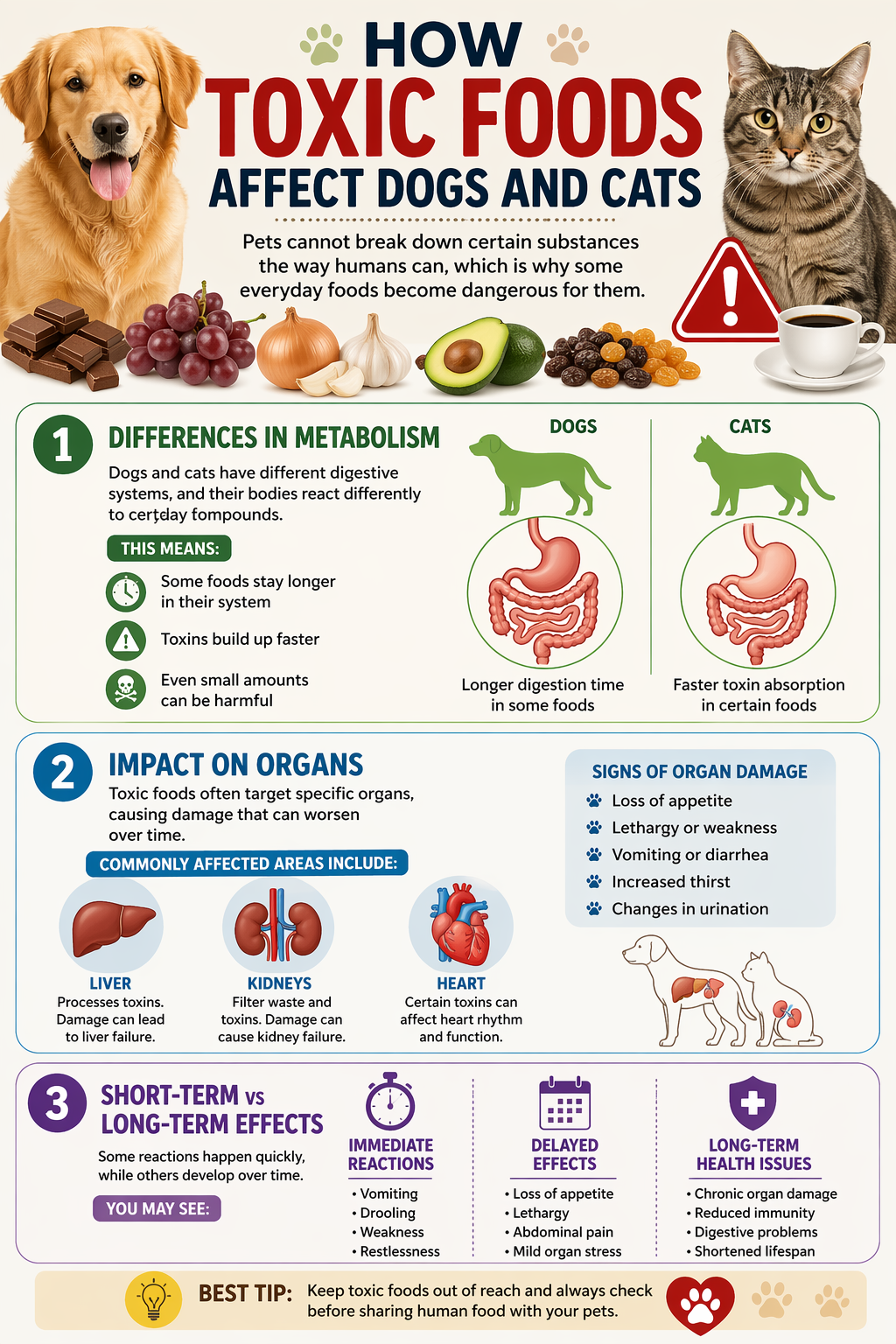
Pets cannot break down certain substances the way humans can, which is why some everyday foods become dangerous for them.
Differences in Metabolism
Dogs and cats have different digestive systems, and their bodies react differently to certain compounds.
This means:
- Some foods stay longer in their system
- Toxins build up faster
- Even small amounts can be harmful
Impact on Organs
Toxic foods often target specific organs, causing damage that can worsen over time.
Commonly affected areas include:
- Liver
- Kidneys
- Heart
Short-Term vs Long-Term Effects
Some reactions happen quickly, while others develop over time.
You may see:
- Immediate vomiting or weakness
- Delayed organ damage
- Long-term health issues
Most Common Toxic Human Foods for Dogs and Cats
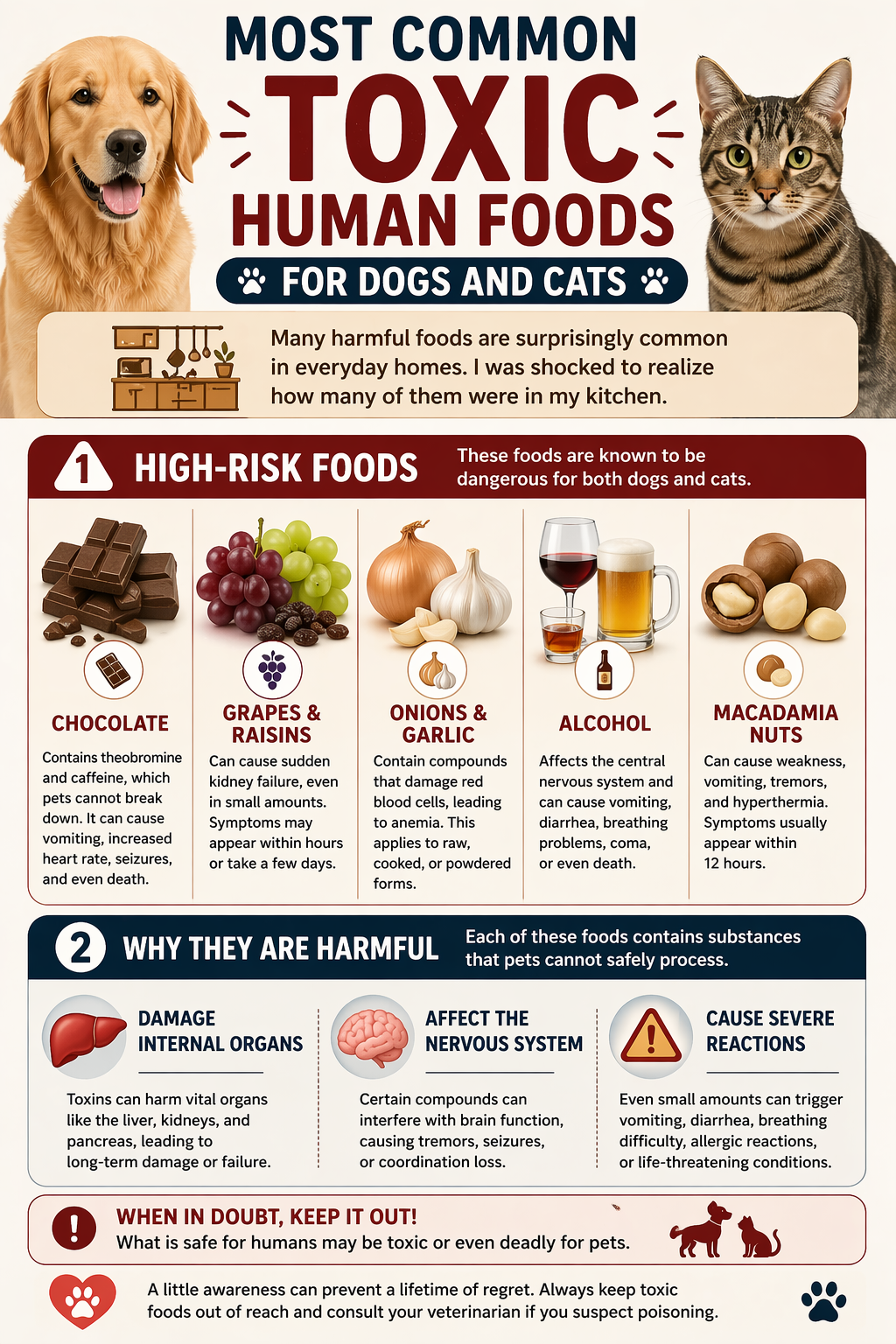
Many harmful foods are surprisingly common in everyday homes. I was shocked to realize how many of them were in my kitchen.
High-Risk Foods
These foods are known to be dangerous for both dogs and cats.
Examples include:
- Chocolate
- Grapes and raisins
- Onions and garlic
- Alcohol
Why They Are Harmful
Each of these foods contains substances that pets cannot safely process.
They may:
- Damage internal organs
- Affect the nervous system
- Cause severe reactions
Chocolate and Caffeine: Hidden Dangers for Pets
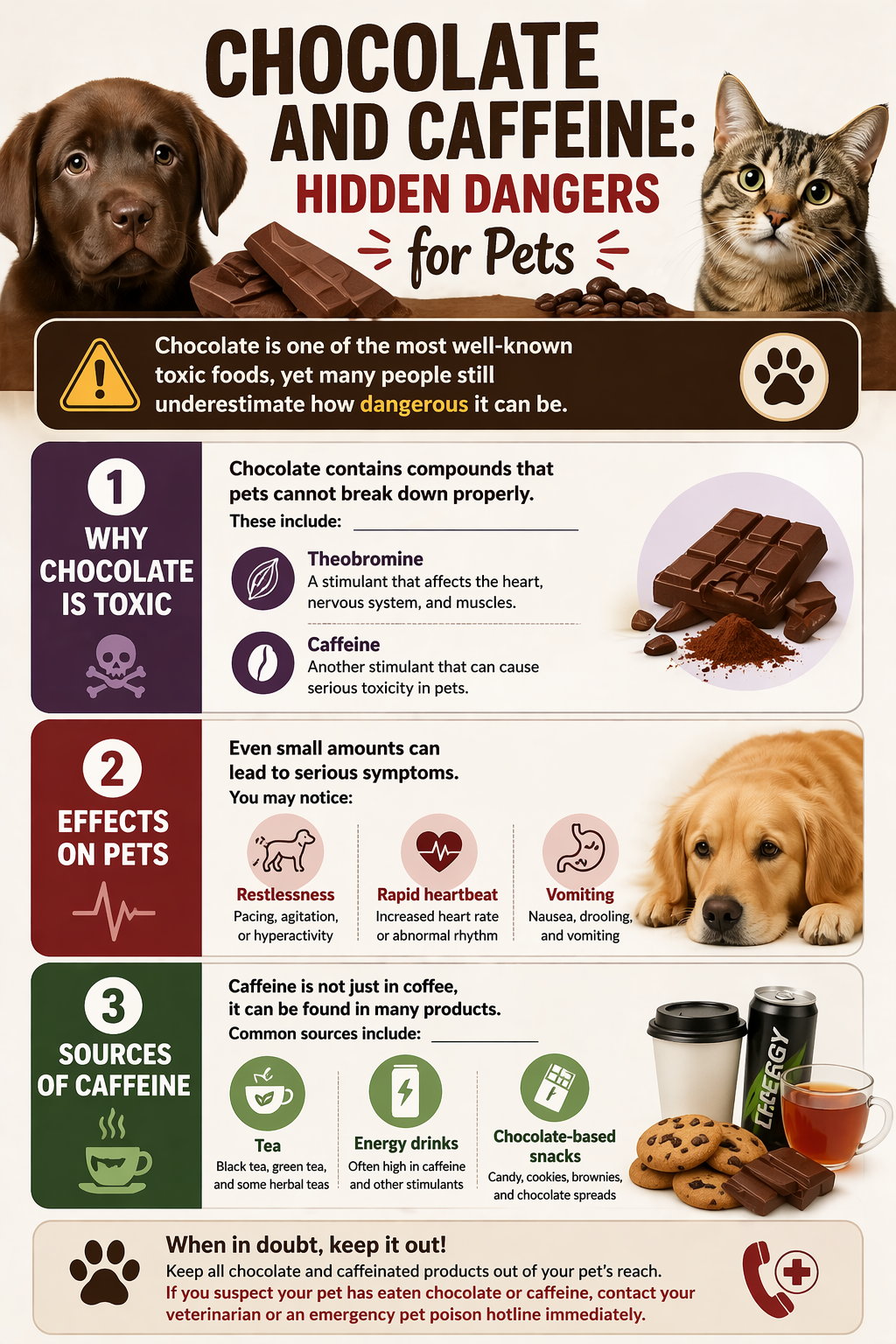
Chocolate is one of the most well-known toxic foods, yet many people still underestimate how dangerous it can be.
Why Chocolate Is Toxic
Chocolate contains compounds that pets cannot break down properly.
These include:
- Theobromine
- Caffeine
Effects on Pets
Even small amounts can lead to serious symptoms.
You may notice:
- Restlessness
- Rapid heartbeat
- Vomiting
Sources of Caffeine
Caffeine is not just in coffee, it can be found in many products.
Common sources include:
- Tea
- Energy drinks
- Chocolate-based snacks
Grapes and Raisins: A Serious Threat to Kidneys
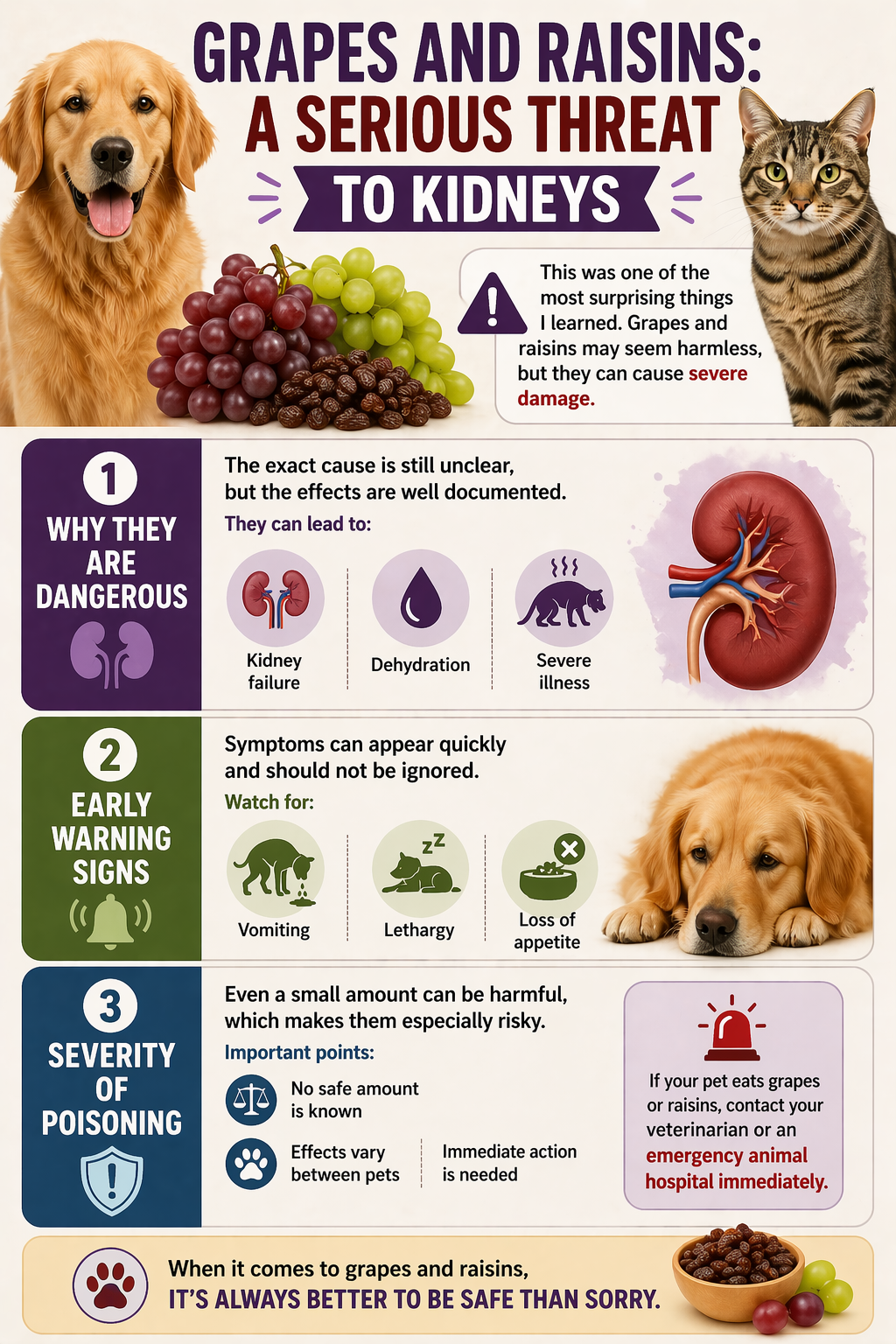
This was one of the most surprising things I learned. Grapes and raisins may seem harmless, but they can cause severe damage.
Why They Are Dangerous
The exact cause is still unclear, but the effects are well documented.
They can lead to:
- Kidney failure
- Dehydration
- Severe illness
Early Warning Signs
Symptoms can appear quickly and should not be ignored.
Watch for:
- Vomiting
- Lethargy
- Loss of appetite
Severity of Poisoning
Even a small amount can be harmful, which makes them especially risky.
Important points:
- No safe amount is known
- Effects vary between pets
- Immediate action is needed
Onions, Garlic, and Alliums: Silent Toxins
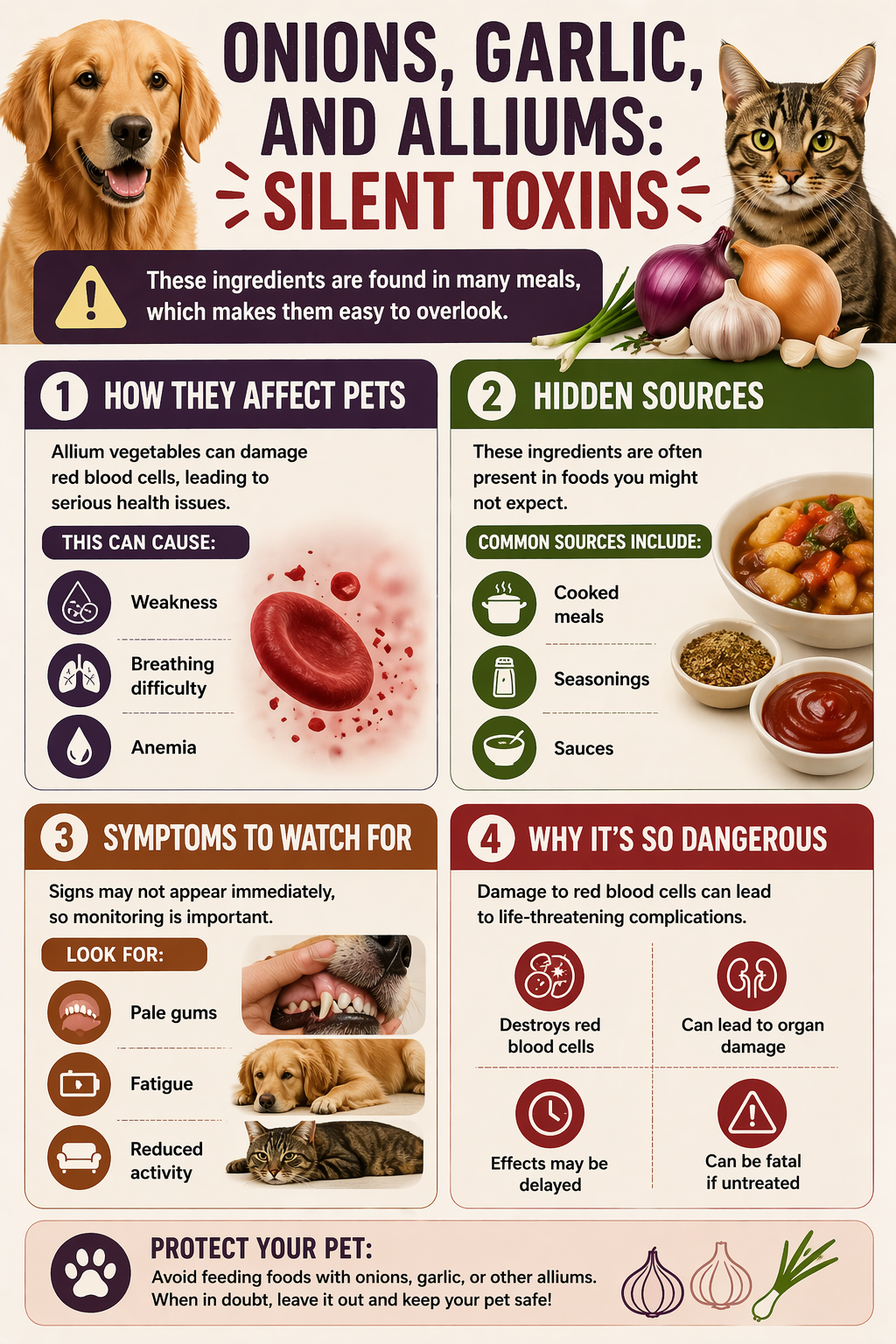
These ingredients are found in many meals, which makes them easy to overlook.
How They Affect Pets
Allium vegetables can damage red blood cells, leading to serious health issues.
This can cause:
- Weakness
- Breathing difficulty
- Anemia
Hidden Sources
These ingredients are often present in foods you might not expect.
Common sources include:
- Cooked meals
- Seasonings
- Sauces
Symptoms to Watch For
Signs may not appear immediately, so monitoring is important.
Look for:
- Pale gums
- Fatigue
- Reduced activity
Alcohol and Raw Dough: Unexpected Household Risks
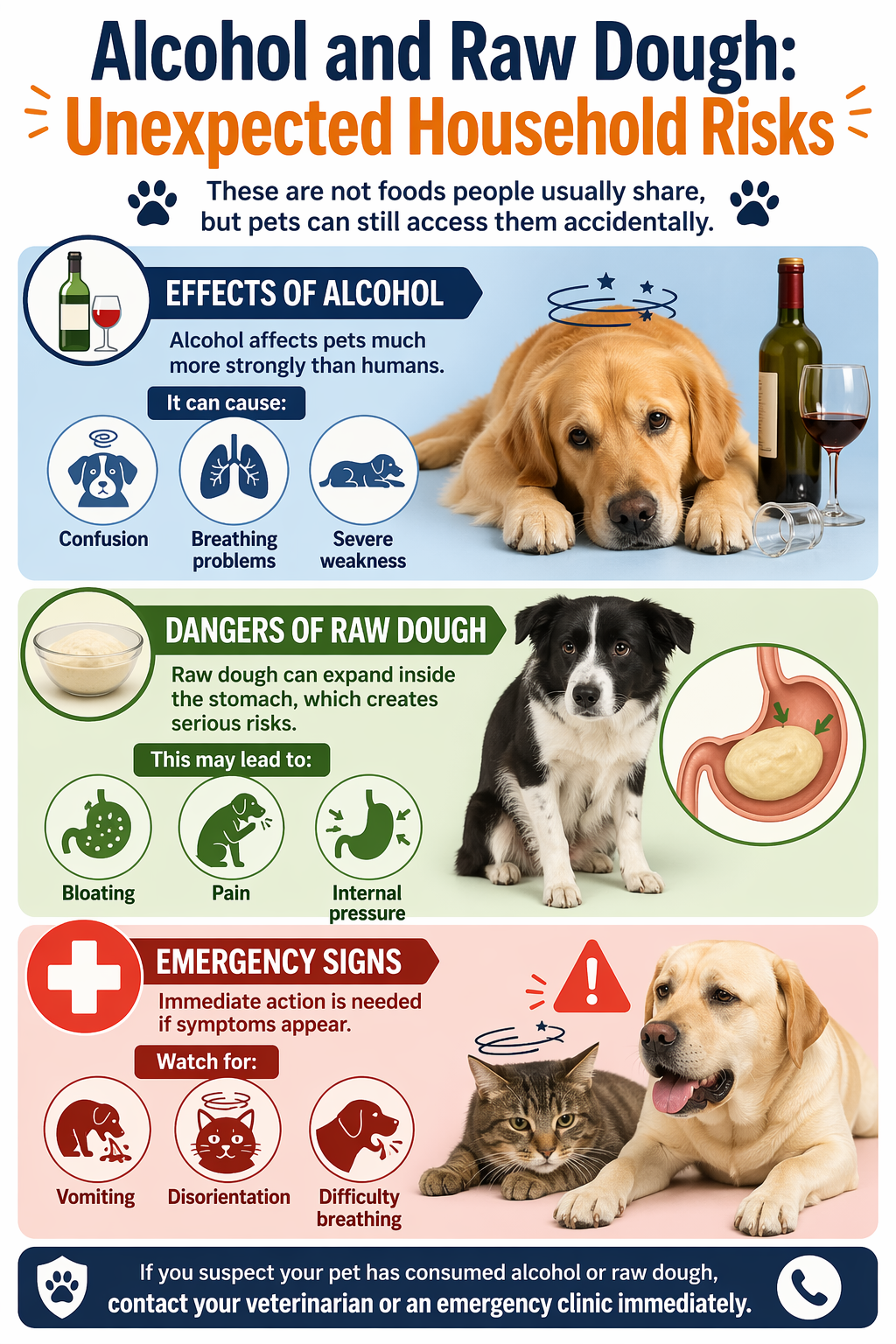
These are not foods people usually share, but pets can still access them accidentally.
Effects of Alcohol
Alcohol affects pets much more strongly than humans.
It can cause:
- Confusion
- Breathing problems
- Severe weakness
Dangers of Raw Dough
Raw dough can expand inside the stomach, which creates serious risks.
This may lead to:
- Bloating
- Pain
- Internal pressure
Emergency Signs
Immediate action is needed if symptoms appear.
Watch for:
- Vomiting
- Disorientation
- Difficulty breathing
Xylitol and Artificial Sweeteners
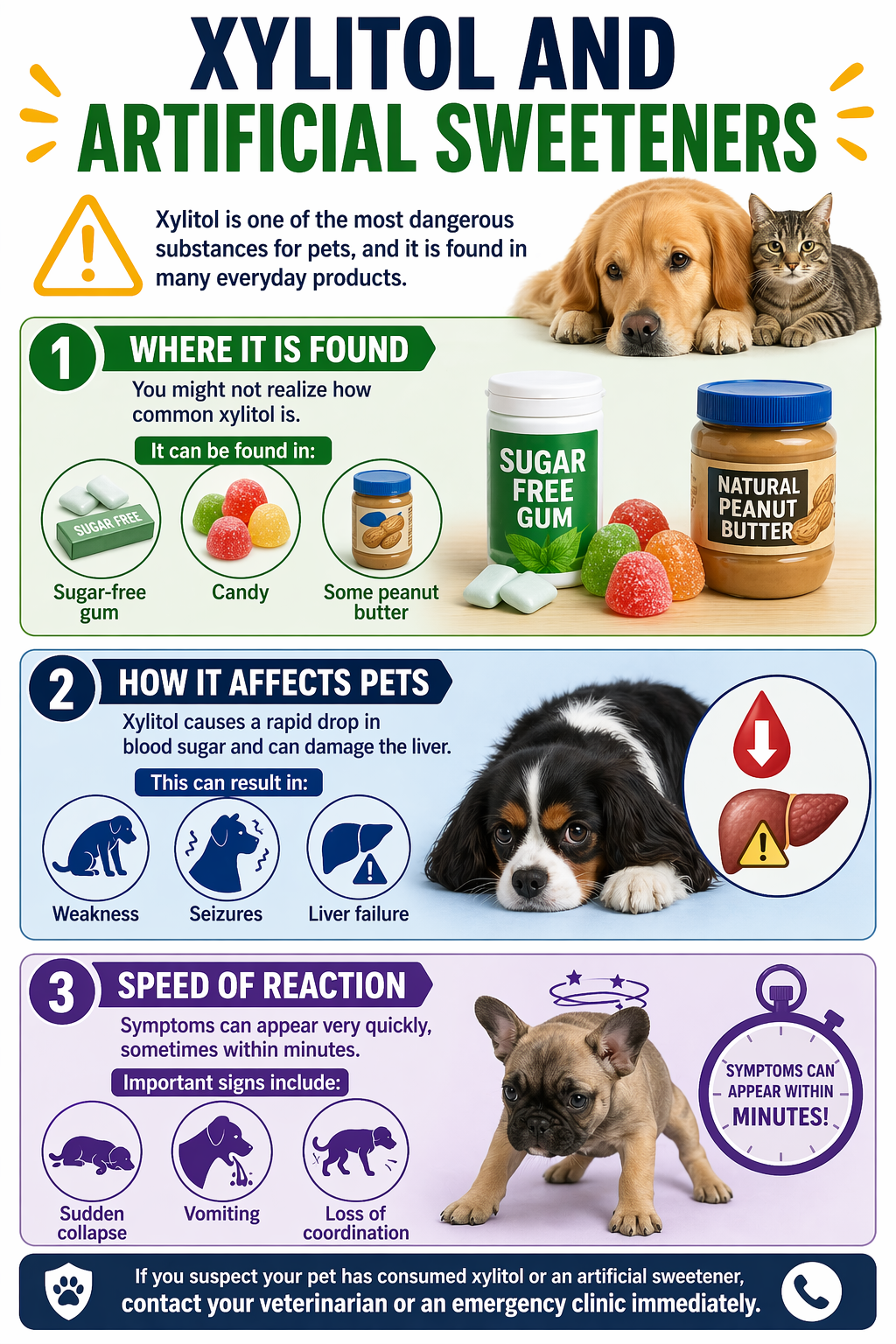
Xylitol is one of the most dangerous substances for pets, and it is found in many everyday products.
Where It Is Found
You might not realize how common xylitol is.
It can be found in:
- Sugar-free gum
- Candy
- Some peanut butter
How It Affects Pets
Xylitol causes a rapid drop in blood sugar and can damage the liver.
This can result in:
- Weakness
- Seizures
- Liver failure
Speed of Reaction
Symptoms can appear very quickly, sometimes within minutes.
Important signs include:
- Sudden collapse
- Vomiting
- Loss of coordination
Dairy, Fatty Foods, and Processed Snacks
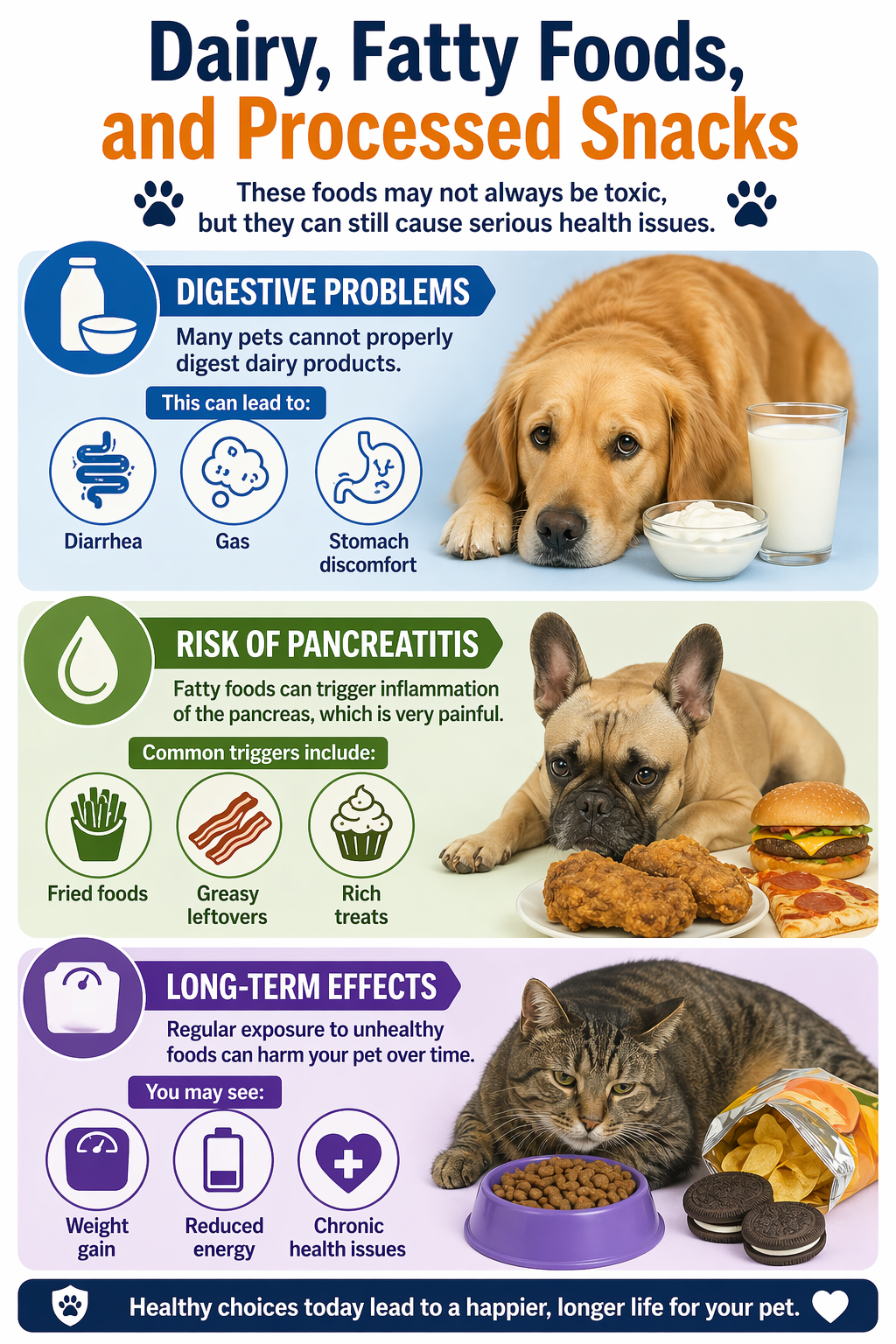
These foods may not always be toxic, but they can still cause serious health issues.
Digestive Problems
Many pets cannot properly digest dairy products.
This can lead to:
- Diarrhea
- Gas
- Stomach discomfort
Risk of Pancreatitis
Fatty foods can trigger inflammation of the pancreas, which is very painful.
Common triggers include:
- Fried foods
- Greasy leftovers
- Rich treats
Long-Term Effects
Regular exposure to unhealthy foods can harm your pet over time.
You may see:
- Weight gain
- Reduced energy
- Chronic health issues
Bones and Cooked Food Hazards
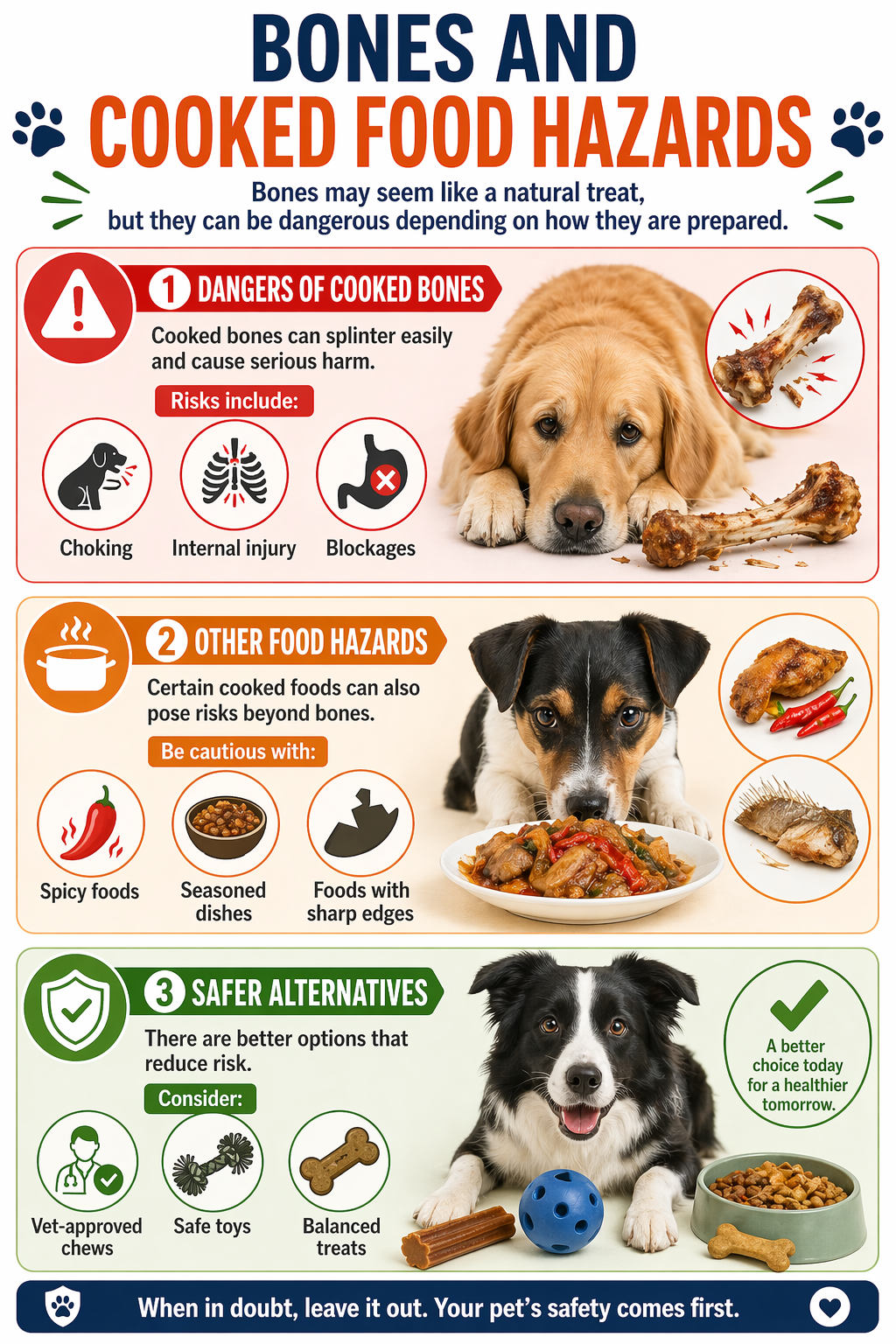
Bones may seem like a natural treat, but they can be dangerous depending on how they are prepared.
Dangers of Cooked Bones
Cooked bones can splinter easily and cause serious harm.
Risks include:
- Choking
- Internal injury
- Blockages
Other Food Hazards
Certain cooked foods can also pose risks beyond bones.
Be cautious with:
- Spicy foods
- Seasoned dishes
- Foods with sharp edges
Safer Alternatives
There are better options that reduce risk.
Consider:
- Vet-approved chews
- Safe toys
- Balanced treats
Signs of Food Poisoning in Dogs and Cats
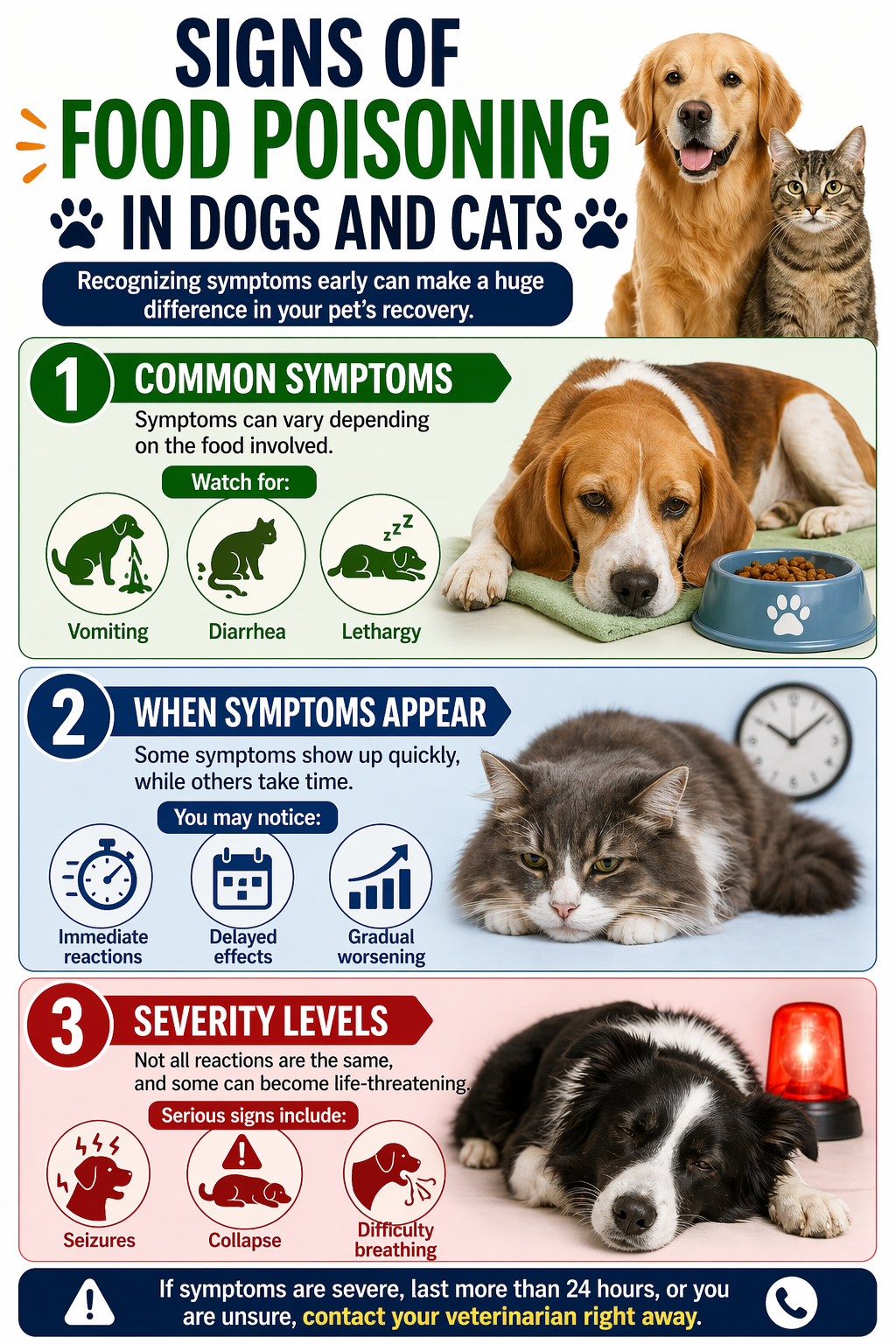
Recognizing symptoms early can make a huge difference in your pet’s recovery.
Common Symptoms
Symptoms can vary depending on the food involved.
Watch for:
- Vomiting
- Diarrhea
- Lethargy
When Symptoms Appear
Some symptoms show up quickly, while others take time.
You may notice:
- Immediate reactions
- Delayed effects
- Gradual worsening
Severity Levels
Not all reactions are the same, and some can become life-threatening.
Serious signs include:
- Seizures
- Collapse
- Difficulty breathing
What to Do If Your Pet Eats Toxic Food
This is something I hope you never have to deal with, but knowing what to do can save your pet’s life.
Immediate Steps
Acting quickly is the most important thing.
Do this:
- Remove access to the food
- Stay calm
- Observe symptoms
When to Seek Help
Some situations require immediate professional attention.
Seek help if:
- Symptoms appear quickly
- The food is highly toxic
- You are unsure what was eaten
What Not to Do
Certain actions can make things worse.
Avoid:
- Waiting too long
- Giving random remedies
- Ignoring symptoms
Conclusion
Keeping your pet safe starts with awareness. Many toxic foods are common in everyday life, which makes it easy to overlook the risks. Once you understand what to avoid and what to watch for, you can create a safer environment for your pet and avoid preventable health emergencies.


