How to Train a Puppy at Home For New Dog Owners (Step-by-Step Guide)
Bringing home a new puppy is one of life’s most exciting moments, but let’s be honest, it can also feel a bit overwhelming. Between the adorable chaos and those tiny razor teeth, you might wonder where to even start with training.
Here’s the good news: training your puppy at home is absolutely doable, even if you’ve never done it before. And starting early makes all the difference.
When to Start Training Your Puppy
You can start training the moment your puppy comes home, usually around 8 weeks old. Some people think puppies are too young to learn, but that’s a myth. Your puppy is already learning every single day, whether you’re actively teaching them or not.
The question isn’t whether they’re learning, it’s what they’re learning.
Key Developmental Windows for Learning
Puppies go through critical socialization periods:
- 3 to 12 weeks: Prime time for socialization and positive exposure to new things
- 8 to 16 weeks: Perfect for basic obedience and house training
- 12 to 18 weeks: Continued learning and reinforcement
Missing these windows doesn’t mean all hope is lost, but training becomes easier when you work with your puppy’s natural development.
Essential Puppy Training Tips
Before we dive into specific training methods, let’s cover some universal principles that will make everything easier.
Use Positive Reinforcement
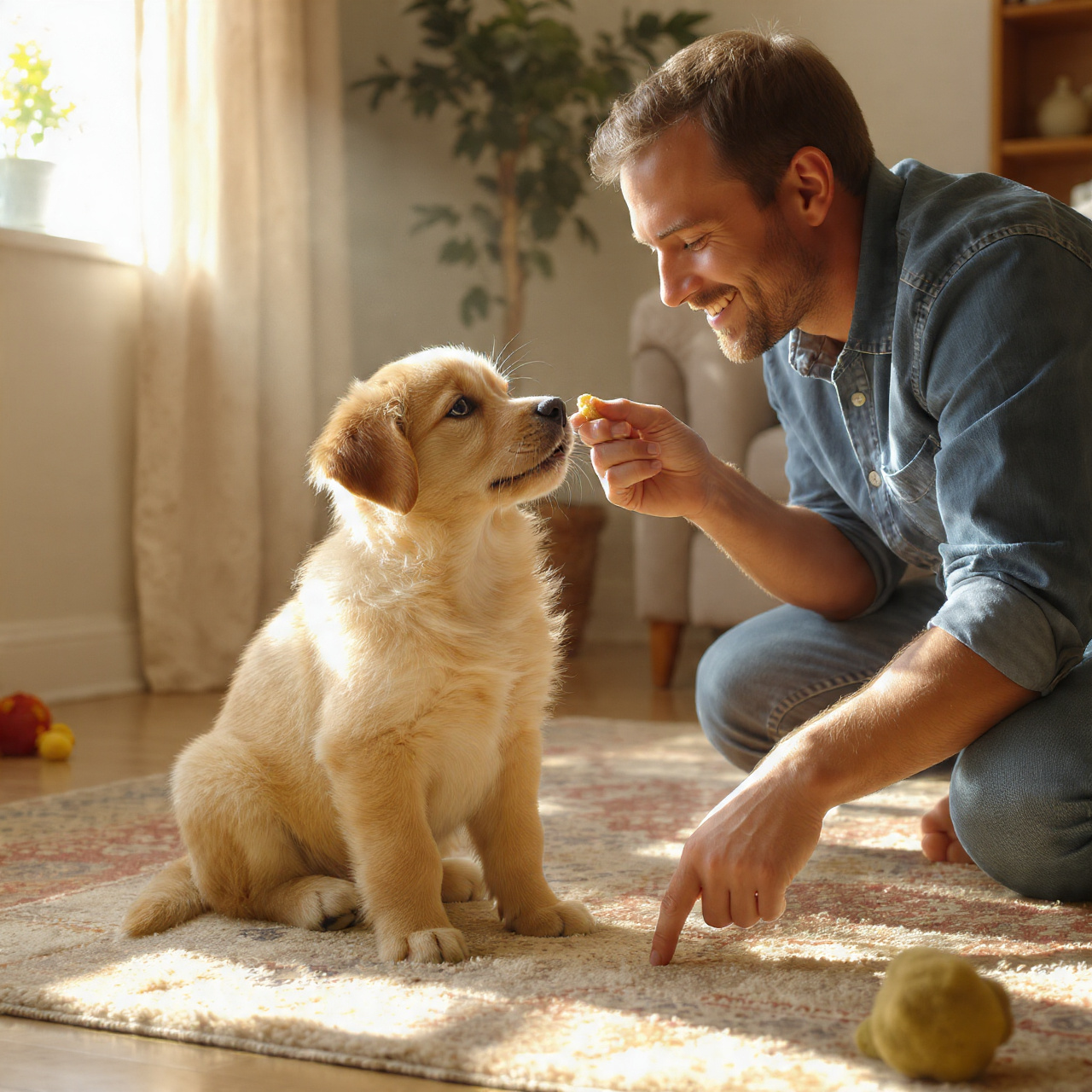
Reward the behaviors you want to see more of. This means treats, praise, toys, whatever makes your puppy light up. Positive reinforcement works faster and builds a better relationship than punishment ever will.
Keep Training Sessions Short
Puppies have the attention span of, well, puppies. Aim for 5 to 10 minute sessions, multiple times a day. Think of it as puppy school with lots of recess breaks.
Be Consistent With Cues and Rewards
Everyone in your household needs to use the same words and hand signals. If you say “off” and your partner says “down,” your puppy will just be confused. Pick your cues and stick with them.
Practice in Different Environments
Your puppy might be a rockstar at “sit” in the living room but completely forget the command at the park. That’s normal. Practice everywhere: your backyard, the sidewalk, a friend’s house. This helps your puppy generalize what they’ve learned.
Some days your puppy will nail everything. Other days they’ll act like they’ve never heard the word “sit” in their life. That’s just part of the process. Stay calm, keep it positive, and remember that every puppy learns at their own pace.
Step-by-Step Puppy Training Guide
1. Potty Training (House Training)
This is probably your biggest priority right now, and I don’t blame you.
Accidents will happen. Lots of them. Your puppy isn’t being spiteful, they simply don’t have full bladder control yet and don’t understand where they’re supposed to go.
Stick to a Consistent Potty Schedule
Take your puppy out:
- First thing in the morning
- After every meal
- After naps
- After play sessions
- Before bedtime
- Every 2 to 3 hours in between
Yes, it’s a lot. But consistency is everything.
Use a Crate Effectively
Dogs naturally avoid soiling their sleeping area. A properly sized crate (just big enough to stand up, turn around, and lie down) becomes your best friend for house training.
Taking Your Puppy Outside: Tips and Cues
Always take your puppy to the same spot. The scent will remind them why they’re there. Use a cue phrase like “go potty” while they’re doing their business, then throw a party when they finish. And I mean a party, treats, praise, the works.
Handling Accidents Properly
Catch them in the act? Calmly interrupt with a gentle “oops” and take them outside immediately. Never yell or punish. Found an accident after the fact? Just clean it up with an enzyme cleaner and move on. Your puppy won’t connect the punishment to something they did 20 minutes ago.
Avoiding Puppy Pads
I know they seem convenient, but puppy pads can actually prolong house training. They teach your puppy it’s okay to go inside, which is confusing when you’re trying to teach the opposite.
Crate Training
Get a crate that will fit your puppy when they’re fully grown, and use a divider to adjust the space as they grow. Wire crates offer visibility, plastic crates feel more den-like. Either works.
Making the Crate a Positive Space
Never use the crate as punishment. Toss treats inside, feed meals in there, put comfortable bedding in it. You want your puppy to think the crate is the best spot in the house.
Gradually Increasing Time in the Crate
Start with just a few minutes while you’re home. Gradually work up to longer periods. The goal is for your puppy to feel calm and safe, not trapped and anxious.
2. Basic Cues (Sit, Stay, Come)
Teaching Commands With Positive Reinforcement
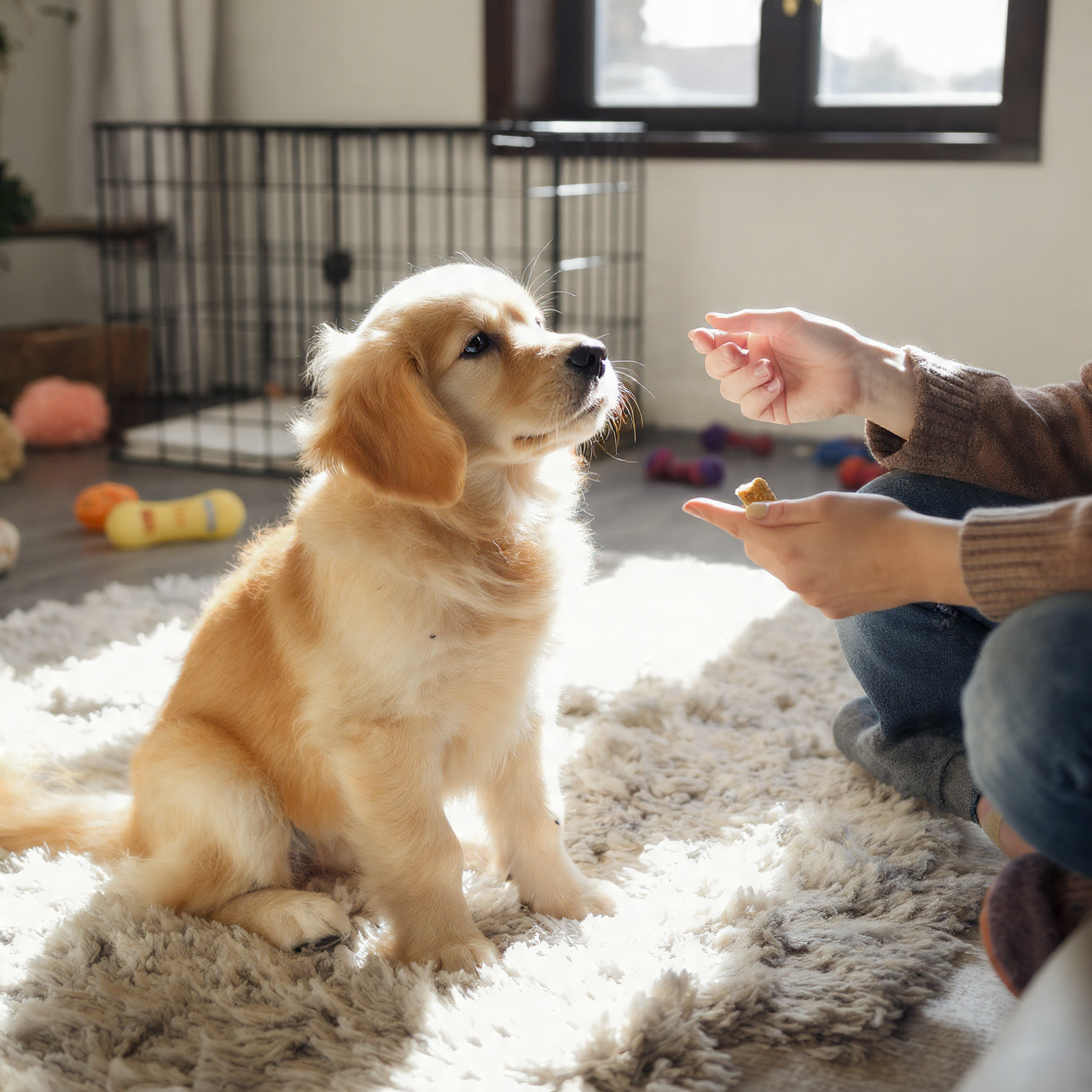
Start with “sit.” Hold a treat near your puppy’s nose and slowly move it back over their head. Their bottom will naturally lower. The moment it touches the ground, say “yes” and give the treat.
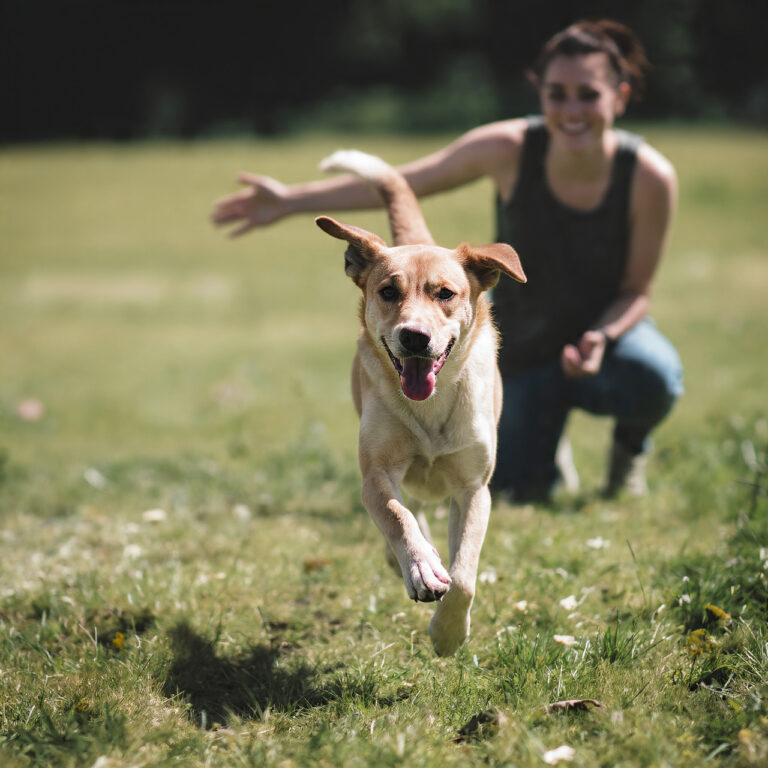
For “come,” start in a hallway or small room. Get down to their level, show a treat, and say “come” in an excited voice. Reward generously when they reach you.
“Stay” comes later, after your puppy has mastered sit. Ask them to sit, hold your hand up like a stop sign, and take one step back. If they stay for even a second, reward them. Gradually increase distance and duration.
Reinforcing Safety and Obedience
These aren’t just party tricks. A solid “come” could save your puppy’s life if they slip their leash near traffic. Practice these commands daily.
3. Leash Training
Introducing the Leash Indoors
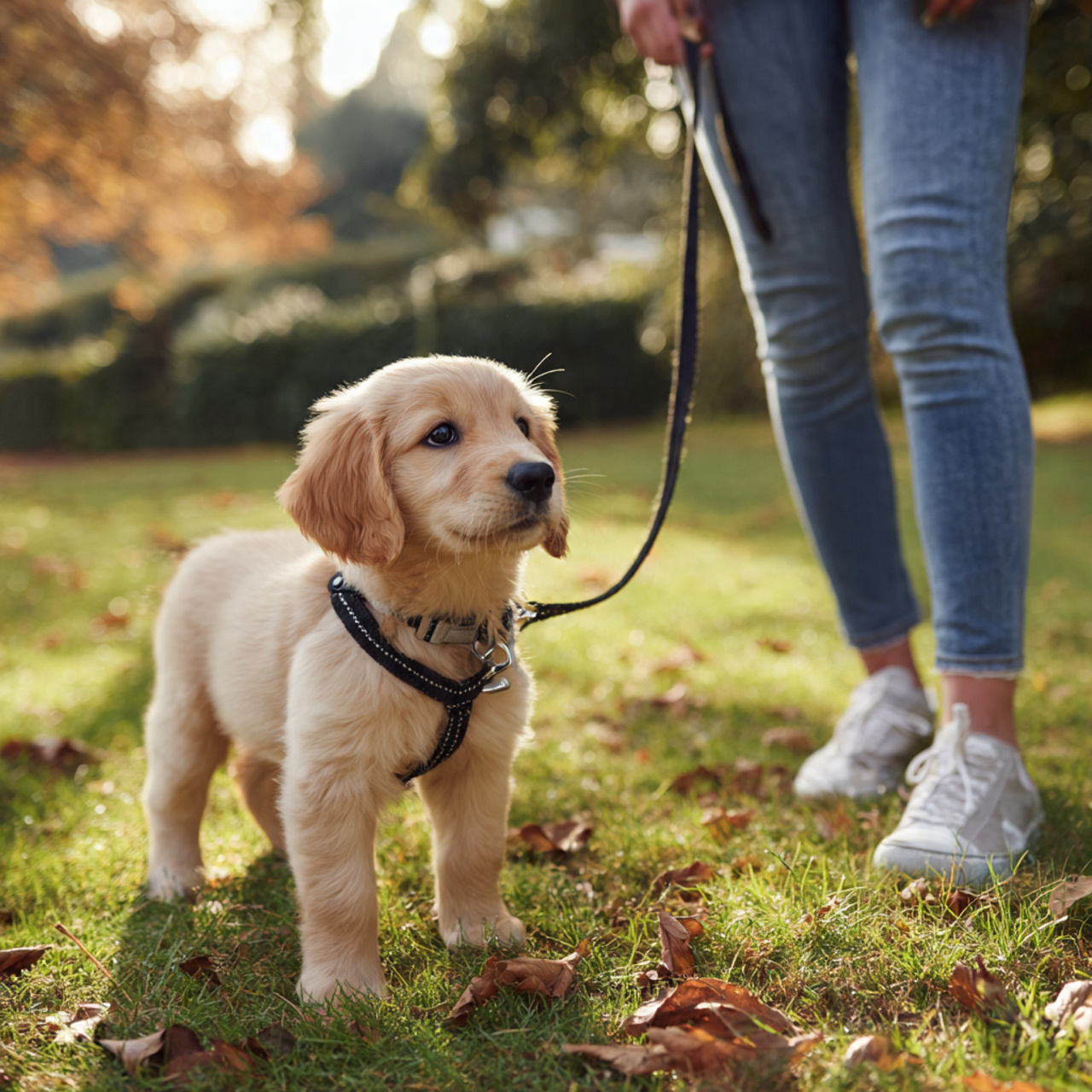
Let your puppy wear their collar or harness around the house first. Once they’re comfortable, attach the leash and let them drag it around under supervision. This helps them get used to the feeling.
Practicing Outdoors Gradually
Start in your yard or a quiet area. Let your puppy explore while you hold the leash loosely. When they pull, stop moving. When they look back at you or the leash loosens, move forward again. You’re teaching them that pulling gets them nowhere.
Encouraging Proper Walking Behavior
Keep treats in your pocket and reward your puppy for walking near your side. Use a happy voice to keep their attention on you instead of every leaf and squirrel.
4. Socialization
Interacting With People, Dogs, and Other Animals
Introduce your puppy to different types of people: kids, elderly folks, people in hats, people with beards. Make sure all interactions are positive and never force your puppy into situations that scare them.
For other dogs, arrange playdates with vaccinated, friendly dogs. Puppy classes are also fantastic for this.
Exposure to Different Environments and Situations
Take your puppy everywhere you can (once they’re vaccinated): pet stores, outdoor cafés, busy sidewalks, quiet parks. Let them experience car rides, different surfaces, and various sounds.
Handling Fears and Rewarding Good Behavior
If your puppy seems scared, don’t force them closer to whatever is frightening them. Let them observe from a distance and reward calm behavior. Gradually decrease the distance over multiple sessions.
Common Puppy Training FAQs
How Long Does It Take to Train a Puppy?
Basic house training usually takes 4 to 6 months, though some puppies catch on faster. Basic obedience commands can be learned in a few weeks, but true reliability takes months of practice.
When Should I Start Puppy Training Classes?
Once your puppy has had at least their first round of vaccinations, usually around 10 to 12 weeks. Check with your vet first.
What’s the First Thing to Teach a Puppy?
Their name, followed by potty training and crate training. These create the foundation for everything else.
How to Stop Indoor Accidents
Consistency is key. Stick to your schedule, reward outdoor potty breaks heavily, and clean accidents thoroughly with enzyme cleaners to remove scent markers.
Final Thoughts
Training a puppy takes time, patience, and consistency, but it’s one of the most rewarding things you’ll ever do. You’re not just teaching commands, you’re building a language you and your dog will share for years to come.
Maintaining a Lifelong Training Routine
Training doesn’t stop after puppyhood. Keep practicing commands, learning new tricks, and providing mental stimulation throughout your dog’s life.
Strengthening the Bond Between You and Your Puppy
Every training session is quality time together. You’re learning to understand each other, building trust, and creating a partnership that will bring you both joy for many years.
Remember, every puppy is different. What works perfectly for one might not work for another. Stay flexible, celebrate small victories, and don’t be afraid to ask for help from a professional trainer if you need it.