
Can Dogs Eat Rice? 5 Key Benefits and Potential Risks You Should Know
If you’ve ever wondered whether it’s safe to share your rice with your dog, you’re not alone. Dogs can eat rice, but like anything we feed them, it comes with benefits and risks. Let’s break down everything you need to know to feed rice safely and responsibly.
Is Rice Safe for Dogs?

Yes, rice is safe for dogs when cooked plain and given in moderation. It’s non-toxic, easily digestible, and often recommended by veterinarians as a bland food for dogs with upset stomachs.
Rice also contains valuable nutrients like:
- Magnesium
- Phosphorus
- Manganese
- Selenium
- Iron
- Vitamin B
- Folic Acid
- Thiamin
- Niacin
These nutrients can support overall health, energy, and even immune function, making rice a handy addition to your dog’s diet in the right situations.
Can Dogs Eat White Rice?
:max_bytes(150000):strip_icc():format(webp)/GettyImages-660730432-93badbc90ce0487d82ff8033236e9dd3.jpg)
White rice is the type most commonly used for dogs, especially those with digestive issues.
Benefits of White Rice
- Easy on the stomach: White rice is bland, which can soothe upset stomachs.
- Helps with diarrhea: The starch in white rice helps bind stools.
- Quickly digestible: Dogs can process it easily, giving them energy without upsetting their system.
- Fiber content: Helps regulate digestion in mild cases.
Precautions
While white rice is safe, it shouldn’t be a daily snack. It has a high glycemic index, meaning it can spike blood sugar. Dogs with diabetes, obesity, or weight management issues should only eat white rice under a veterinarian’s guidance.
Can Dogs Eat Brown Rice?

Brown rice is another option, but it has a few differences from white rice.
Benefits of Brown Rice
- Lower glycemic index: Less likely to spike blood sugar.
- High fiber: Keeps your dog fuller for longer, which is great for weight management.
Considerations
- Harder to digest: Brown rice can be tougher on a dog’s digestive system, so it’s not ideal for dogs with diarrhea or sensitive stomachs.
- Feed in moderation: As with all rice, it should only make up a small portion of your dog’s diet.
Other Types of Rice Dogs Can Eat
Not all rice is created equal, but several varieties are safe for dogs:
- Jasmine rice: A long-grain white rice, easy to digest.
- Basmati rice: Also a long-grain white rice, safe for snacking.
- Sticky rice and sushi rice: Safe if plain, but avoid seasoned or fried versions.
Avoid rice with additives like butter, garlic, onions, or sauces, as these can be harmful to dogs.
How to Safely Feed Your Dog Rice
To get the benefits of rice without risks, follow these simple rules:
Cook it Plain
Always cook rice fully and serve it plain. Avoid butter, oils, salt, or seasonings.
Add Protein if Needed
If your dog is eating rice for digestive issues, pair it with boiled chicken or turkey. A 2:1 rice-to-protein ratio helps bind stools while providing protein.
Introduce Gradually
Start with small portions to ensure your dog tolerates it well. Some dogs may experience mild gas or bloating if introduced too quickly.
Frequency
Rice should be a treat or supplement, not a main meal. Serve 2-3 times per week unless a vet recommends otherwise.
How Much Rice Can a Dog Eat?
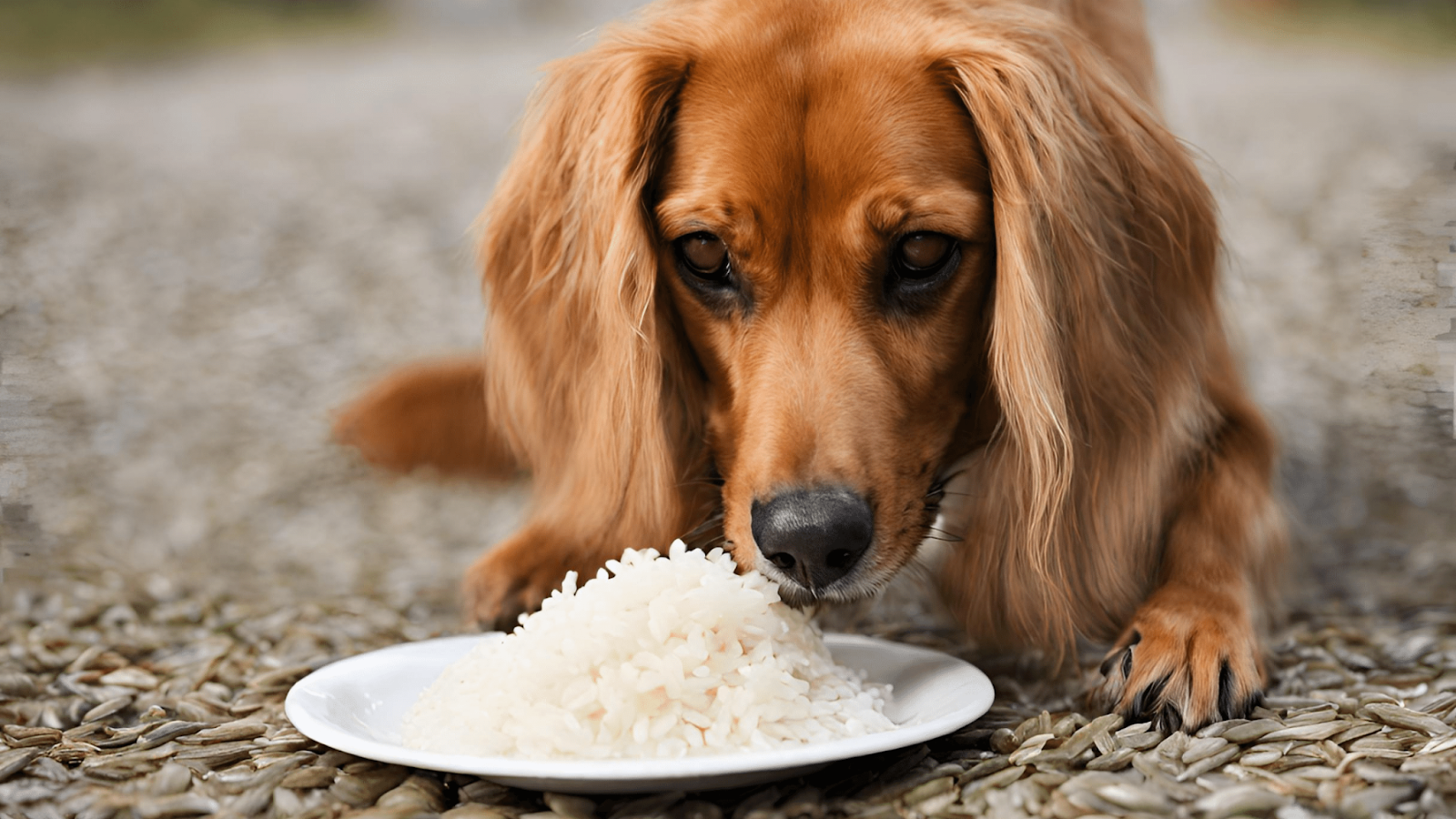
Portion control is key. Treats and supplements should never exceed 10% of your dog’s daily diet. Here’s a simple guide based on dog size:
- Extra-small dog (2–20 lbs): 1–2 tablespoons
- Small dog (21–30 lbs): 2–3 tablespoons
- Medium dog (31–50 lbs): ¼ cup
- Large dog (51–90 lbs): ⅓ cup
- Extra-large dog (91+ lbs): ½ cup
Always adjust based on your dog’s activity level, age, and health.
5 Benefits of Feeding Rice to Dogs
Rice isn’t just filler, it can support your dog in meaningful ways.
- Digestive Support
White rice is gentle on upset stomachs and helps bind diarrhea, making it a go-to for dogs with temporary gastrointestinal issues. - Energy Boost
The carbohydrates in rice provide a quick, easily digestible energy source, perfect for active dogs or recovery after illness. - Weight Management
Brown rice’s fiber content keeps dogs feeling full longer, helping manage weight and reduce snacking urges. - Nutritious Supplement
Rice contains essential minerals and vitamins that support your dog’s overall health. - Versatility
Rice pairs well with lean proteins and can be mixed with vegetables, creating a balanced meal if your dog requires a bland diet.
5 Risks of Feeding Rice to Dogs

While rice has benefits, it’s important to know the risks.
- High Glycemic Index
Too much white rice can raise blood sugar, especially in diabetic or overweight dogs. - Digestive Upset in Some Dogs
Sudden introduction of rice may cause bloating or gas in sensitive dogs. - Overfeeding
Rice should not replace a balanced diet. Too much can lead to nutrient imbalance and weight gain. - Additives Are Dangerous
Butter, salt, garlic, or sauces commonly used in human rice dishes can be toxic to dogs. - Not a Complete Meal
Rice lacks certain nutrients dogs need, like protein and fat. Always balance with high-quality dog food.
When Rice is Helpful for Dogs
Rice is especially useful in these scenarios:
- Diarrhea or upset stomach: Plain white rice soothes the digestive tract.
- Recovery after illness: Easy-to-digest carbs give energy without straining the stomach.
- Weight management: Brown rice provides fiber to help with satiety.
- Training treats: Small portions can be a safe, low-calorie reward.
Always consult your veterinarian before using rice to treat medical issues, as some underlying conditions may require more specific dietary solutions.
Conclusion
Yes, dogs can eat rice, and it can be a helpful addition to their diet when fed safely. White rice is best for digestive problems, while brown rice can support fullness and weight management. The key is moderation, proper preparation, and pairing it with a balanced diet.
Remember, rice is a supplement, not a substitute. Stick to small portions, avoid seasonings, and always monitor your dog for any digestive reactions. When used wisely, rice can be a safe, nutritious, and tasty addition to your dog’s meals.