10 Cat Grooming Tips for Short-Haired and Long-Haired Cats
Grooming your cat is one of those things that sounds easy until you are actually doing it. Every cat reacts differently, and coat length plays a much bigger role than many people expect.
Over time, I realized that grooming is not just about fur, it is about comfort, health, and trust. With the right approach, grooming stops feeling like a chore and starts feeling like quiet bonding time that both you and your cat can enjoy.
Tip 1: Choose the Right Grooming Tools for Your Cat
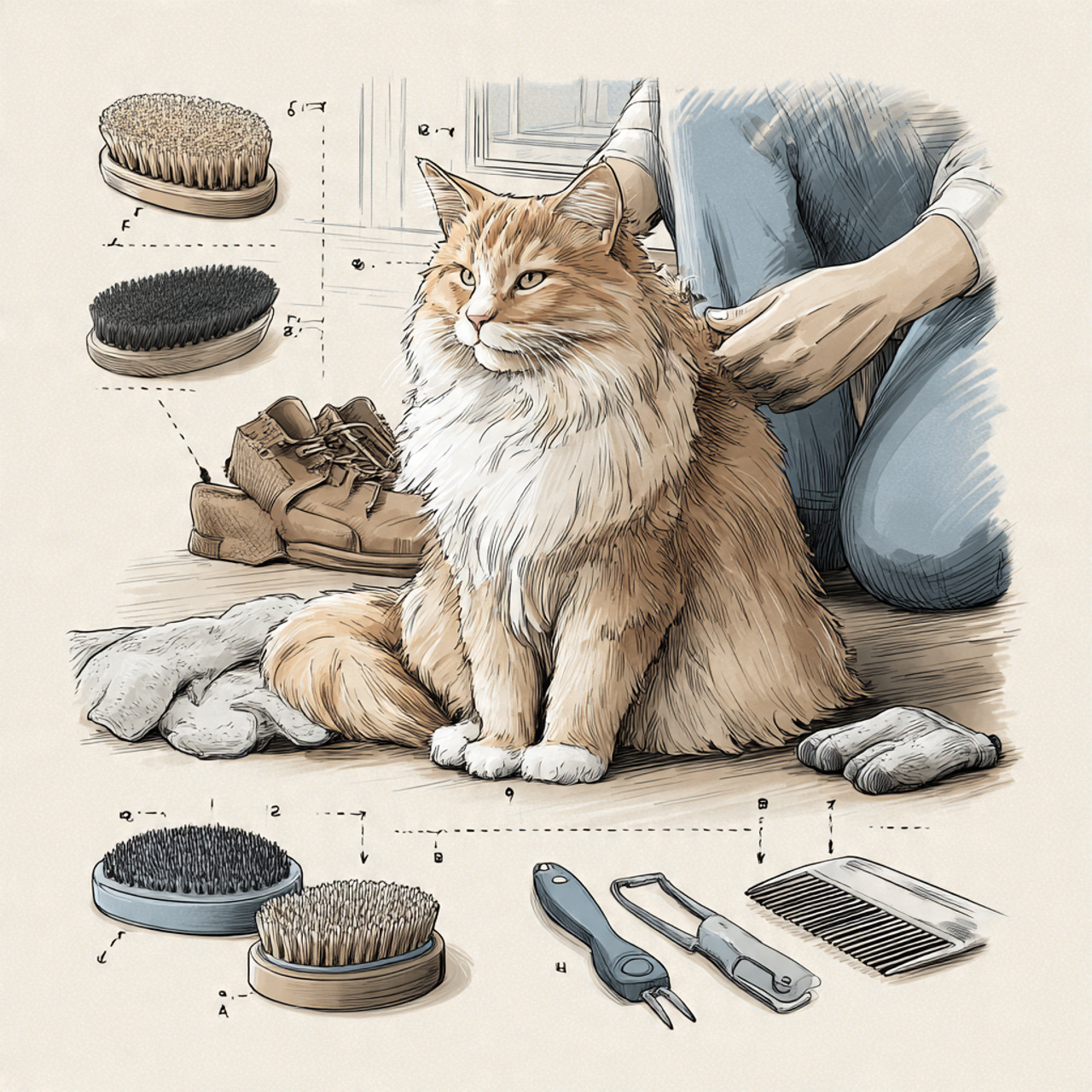
When I first started grooming cats, I assumed one brush worked for all. That mistake showed quickly. The wrong tool pulls fur, irritates skin, and makes cats avoid grooming altogether.
Short-haired cats usually need gentler tools. Their coats sit close to the skin, so heavy brushes can feel rough instead of soothing. Simple tools often work best and make sessions quick.
Long-haired cats need more support. Their fur traps loose hair underneath, which leads to tangles if not handled properly. Tools should separate fur gently without scraping the skin.
Using the right tools also saves time. Grooming becomes smoother, and your cat learns to relax instead of resisting.
Helpful grooming tools by coat type:
- Short-haired cats, soft bristle brush, rubber grooming glove
- Long-haired cats, wide-tooth comb, slicker brush
- All cats, clean tools with smooth edges
Tip 2: Establish a Consistent Grooming Routine
Cats thrive on routine. Grooming at random times often leads to resistance, while a predictable schedule helps your cat feel calm and prepared.
Short-haired cats usually stay neat with minimal effort. A simple routine keeps shedding manageable and prevents fur buildup around the home.
Long-haired cats require more frequent attention. Skipping sessions often leads to knots that take longer to remove later.
Consistency matters more than length. Even a few calm minutes done regularly builds trust and makes grooming feel normal.
Simple ways to build a routine:
- Groom at the same time of day
- Keep sessions short at first
- Stop before your cat becomes restless
Tip 3: Prevent and Remove Mats and Tangles
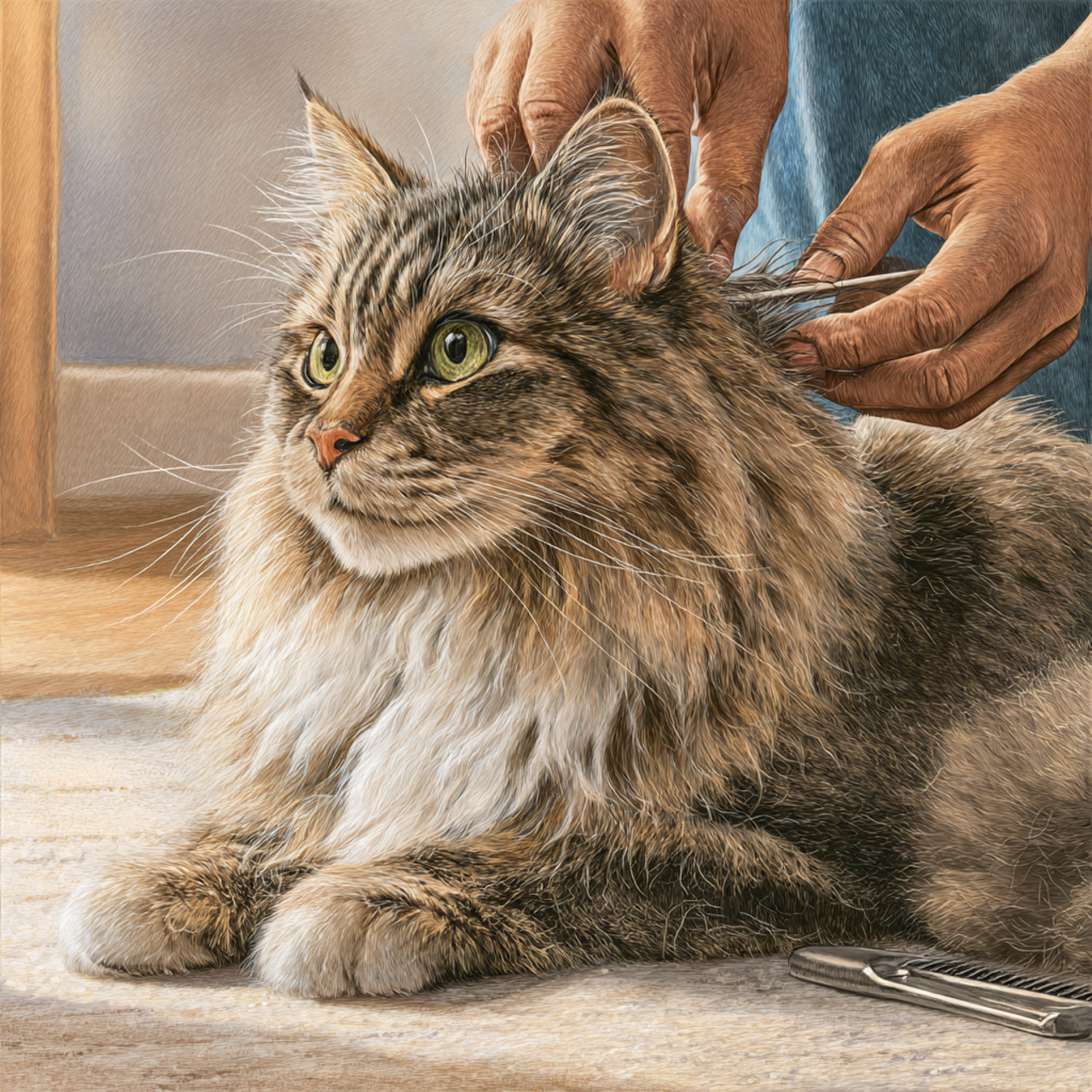
Mats form quietly and tighten fast. Once they pull on the skin, they become painful and stressful for your cat.
Long-haired cats are especially prone to matting in hidden areas. These spots often go unnoticed until grooming becomes uncomfortable.
Small tangles are easiest to manage early. Gentle handling prevents pain and keeps grooming positive.
Trying to rush mat removal usually makes things worse. Slow, patient movements protect your cat’s skin and trust.
Areas that need extra attention:
- Behind the ears
- Under the front legs
- Around the neck
- Along the belly
Tip 4: Reduce Shedding and Hairballs Effectively
Shedding is normal, but grooming controls where that fur ends up. Without help, much of it ends up swallowed during self-grooming.
Hairballs form when swallowed fur builds up in the stomach. While common, frequent hairballs can cause discomfort and digestive issues.
Brushing removes loose hair before your cat ingests it. This is one of the simplest ways to reduce hairballs naturally.
Seasonal shedding increases fur loss. During these times, grooming becomes even more important.
Ways grooming helps control shedding:
- Removes loose fur early
- Reduces swallowed hair
- Keeps coats lighter and cleaner
Tip 5: Proper Bathing Practices for Cats
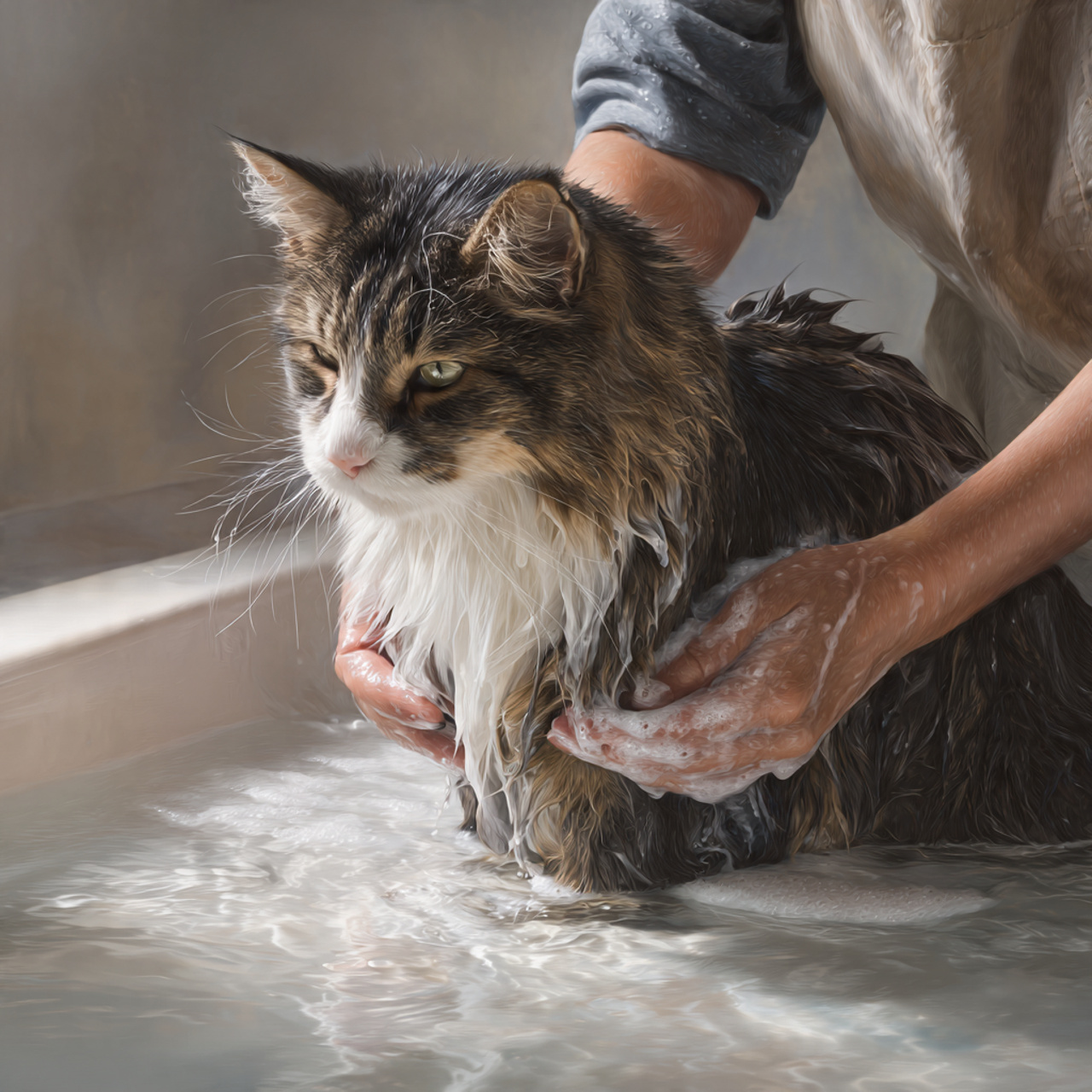
Most cats do not need regular baths. Over-bathing often causes dry skin and unnecessary stress.
Short-haired cats usually stay clean through self-grooming. Baths are rarely needed unless they get into something messy.
Long-haired cats may benefit from occasional baths, especially if oils build up in their fur. Baths should always be gentle and infrequent.
A calm approach makes baths easier. Rushing or forcing water often leads to fear and resistance.
Safe bathing basics:
- Use cat-specific shampoo
- Use lukewarm water only
- Avoid the face and ears
Tip 6: Nail Trimming and Paw Care
Nail trimming is part of grooming that many people avoid. With practice, it becomes quick and manageable.
Overgrown nails can snag on fabric or grow into paw pads. Regular trimming prevents pain and accidental injuries.
Paw checks are just as important. Litter, dirt, and small injuries often go unnoticed without inspection.
Starting slow helps nervous cats adjust. Trimming a few nails at a time is perfectly fine.
Basic nail and paw care tips:
- Trim every two to four weeks
- Cut only the sharp tip
- Check pads for cracks or redness
Tip 7: Ear, Eye, and Facial Grooming
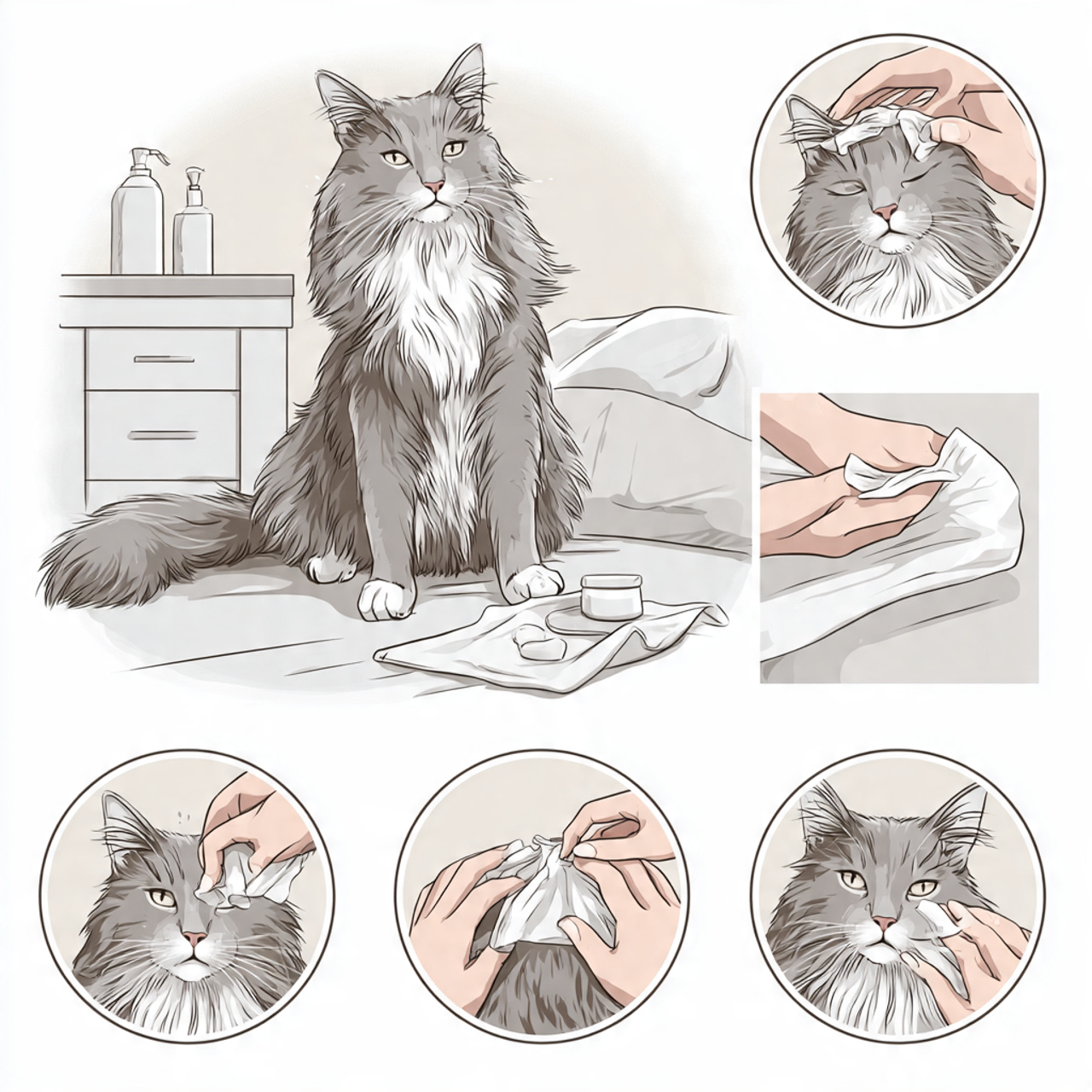
Grooming does not stop at the body. Ears, eyes, and faces need regular attention to prevent infections.
Healthy ears should look clean and pale pink. Strong odors or dark buildup often signal a problem.
Eyes may collect discharge, especially in flat-faced or long-haired cats. Gentle cleaning keeps the area comfortable.
Facial fur can trap moisture and food. Keeping it clean helps prevent irritation and staining.
Simple facial grooming habits:
- Check ears weekly
- Wipe eyes with a soft cloth
- Clean facial fur as needed
Tip 8: Grooming Senior Cats and Cats with Special Needs
As cats age, grooming becomes harder for them. Stiff joints and reduced flexibility limit their ability to clean properly.
Senior cats often develop greasy coats or mats in areas they can no longer reach. Extra help keeps them comfortable.
Cats with anxiety or medical conditions may need gentler handling and shorter sessions.
Watching your cat’s body language helps prevent stress and pain.
Signs your cat needs grooming support:
- Matted or oily fur
- Reduced self-grooming
- Sensitivity to touch
Tip 9: Nutrition’s Role in Coat Health
Grooming alone cannot fix poor coat health. Diet plays a major role in how fur looks and feels.
Cats need high-quality protein to support healthy fur growth. Without it, coats may appear dull or thin.
Fatty acids support skin health and reduce dryness. Balanced nutrition reflects quickly in coat condition.
Sudden coat changes often signal dietary issues and should not be ignored.
Nutrition-related coat warning signs:
- Excessive shedding
- Dry or flaky skin
- Loss of shine
Tip 10: Knowing When to Visit a Professional Groomer
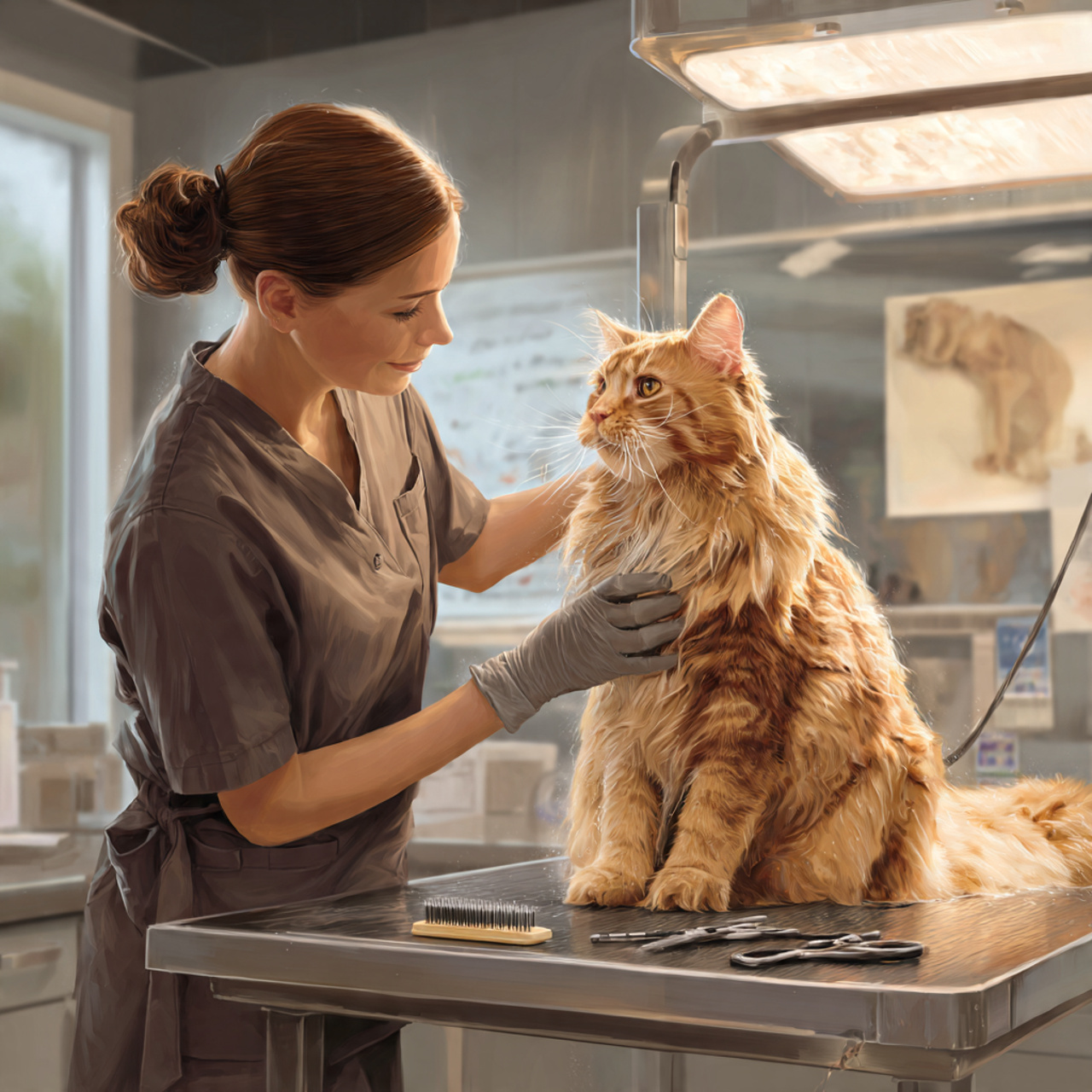
Some grooming tasks are better handled by professionals. This protects both you and your cat.
Severe mats can be painful to remove at home. Professional groomers have tools designed for safe removal.
Cats that become aggressive during grooming may benefit from professional handling.
A good groomer understands feline behavior and works calmly.
Situations that call for professional help:
- Tight or large mats
- Extreme grooming anxiety
- Health-related grooming needs
Common Cat Grooming Mistakes to Avoid
Mistakes happen, especially when learning. Awareness helps prevent discomfort and stress.
Over-brushing can irritate the skin, especially for short-haired cats. Grooming should never cause redness or soreness.
Human grooming products are unsafe for cats. They disrupt skin balance and cause irritation.
Forcing grooming often damages trust. Stopping early is better than pushing through stress.
Mistakes to watch for:
- Grooming too aggressively
- Ignoring warning signs
- Using incorrect products
Frequently Asked Questions About Cat Grooming
Many cat owners wonder how much grooming is really necessary. The answer depends on coat type and individual needs.
Cats groom themselves well, but they cannot remove all loose fur. Human help fills that gap.
Indoor cats still shed and need grooming. Lifestyle does not replace coat care.
Each cat responds differently, so routines should be flexible.
Common grooming reminders:
- Grooming needs vary
- Patience matters
- Routine builds trust
Conclusion
Grooming is one of the easiest ways to care for your cat’s well-being. With simple habits, the right tools, and patience, grooming becomes a calm routine that keeps your cat comfortable and strengthens your bond over time.